In case you had any doubts, the "Five Second Rule" doesn't work, says Dr. Susan Rhem, an infectious disease specialist from the Cleveland Clinic:
A common superstition, the five-second rule states that food dropped on the ground will not be contaminated with bacteria if it is picked up within five seconds of being dropped (Wikipedia).
Comments from Twitter:
@alisha764: The "5 Second Rule" doesn't work: Food + Floor = Bacteria
Showing posts with label Infectious Disease. Show all posts
Showing posts with label Infectious Disease. Show all posts
Tuesday, December 20, 2011

Thursday, October 13, 2011
Neurological and autoimmune disorders after influenza vaccination: no change in risk for Guillain-Barré syndrome, MS, type 1 diabetes, or RA
This Swedish retrospective cohort study, published in BMJ, examined the risk of neurological and autoimmune disorders in people vaccinated against pandemic influenza A (H1N1) with Pandemrix (GlaxoSmithKline) compared with unvaccinated people over 8-10 months.

Image of the H1N1 Influenza Virus, CDC.
One million people were vaccinated against H1N1 and 900,000 remained unvaccinated.
Excess risks among vaccinated people were of low magnitude, but present, for:
- Bell’s palsy (hazard ratio 1.25)
- paresthesia (1.11)
- inflammatory bowel disease (IBD)
Risks for Guillain-Barré syndrome, multiple sclerosis, type 1 diabetes, and rheumatoid arthritis remained unchanged.
The risks of paresthesia and inflammatory bowel disease (IBD) among those vaccinated in the early phase (within 45 days) of the vaccination campaign were significantly increased; the risk being increased within the first 6 weeks after vaccination.
The risks were small but significant among more than one million vaccinated, but only in high risk groups targeted for early vaccination and who were likely to have earlier comorbidity.
The absolute risk of Bell’s palsy was low, 6.4 cases per 100 000 vaccinated population.
References:
Neurological and autoimmune disorders after vaccination against pandemic influenza A (H1N1) with a monovalent adjuvanted vaccine: population based cohort study in Stockholm, Sweden. BMJ 2011; 343:d5956 doi: 10.1136/bmj.d5956 (Published 12 October 2011).
Image of the H1N1 Influenza Virus, CDC.
One million people were vaccinated against H1N1 and 900,000 remained unvaccinated.
Excess risks among vaccinated people were of low magnitude, but present, for:
- Bell’s palsy (hazard ratio 1.25)
- paresthesia (1.11)
- inflammatory bowel disease (IBD)
Risks for Guillain-Barré syndrome, multiple sclerosis, type 1 diabetes, and rheumatoid arthritis remained unchanged.
The risks of paresthesia and inflammatory bowel disease (IBD) among those vaccinated in the early phase (within 45 days) of the vaccination campaign were significantly increased; the risk being increased within the first 6 weeks after vaccination.
The risks were small but significant among more than one million vaccinated, but only in high risk groups targeted for early vaccination and who were likely to have earlier comorbidity.
The absolute risk of Bell’s palsy was low, 6.4 cases per 100 000 vaccinated population.
References:
Neurological and autoimmune disorders after vaccination against pandemic influenza A (H1N1) with a monovalent adjuvanted vaccine: population based cohort study in Stockholm, Sweden. BMJ 2011; 343:d5956 doi: 10.1136/bmj.d5956 (Published 12 October 2011).
Monday, September 26, 2011
Quadruple therapy as first choice for eradication of H. pylori due to clarithromycin-resistance
 Helicobacter pylori is associated with benign and malignant diseases of the upper gastrointestinal tract. Increasing antibiotic resistance has made alternative treatments necessary.
Diagnosis of Helicobacter pylori infection: 13C urea breath test or the stool antigen test as “test and treat strategy”. BMJ, 2012.
Empirical triple therapy (proton-pump inhibitor, clarithromycin, amoxicillin) is currently the first choice for eradication of Helicobacter pylori. As antibiotic resistance to clarithromycin (which has a crucial role in eradication) has increased. The eradication rate with triple therapy has gradually decreased below 80%, and even less.
The aim of this study reported in The Lancet was to assess the efficacy and safety of a new, single-capsule treatment versus the gold standard for H. pylori eradication (triple therapy).
A randomised, open-label trial of adults with H. pylori infection compared the efficacy and safety of:
- quadruple therapy: 10 days of quadruple therapy with omeprazole plus a single three-in-one capsule containing bismuth, metronidazole, and tetracycline
- standard therapy: 7 days of omeprazole, amoxicillin, and clarithromycin (editor note: why not 14 days of therapy?)
H. pylori eradication was established by negative 13C urea breath tests at 28 and 56 days after the end of treatment.
The eradication rates were 80% in the quadruple therapy group versus 55% in the standard therapy group.
The study authors concluded that quadruple therapy should be considered for first-line treatment in view of the rising prevalence of clarithromycin-resistant H. pylori. Quadruple therapy provides superior eradication with similar safety and tolerability to standard therapy.
References:
Helicobacter pylori eradication with a capsule containing bismuth subcitrate potassium, metronidazole, and tetracycline given with omeprazole versus clarithromycin-based triple therapy: a randomised, open-label, non-inferiority, phase 3 trial. The Lancet, Volume 377, Issue 9769, Pages 905 - 913, 12 March 2011.
Quadruple or triple therapy to eradicate H pylori. The Lancet, Volume 377, Issue 9769, Pages 877 - 878, 12 March 2011.
H. pylori eradication provides benefits to patients with functional dyspepsia http://goo.gl/UwxsT
H. pylori image courtesy of www.hpylori.com.au.
Monday, August 29, 2011
Survival Guide - Chigoe Flea - National Geographic Video
Survival Guide - Chigoe Flea - National Geographic Video.
Tunga penetrans is hyperendemic in East Asia, India, and South America, where it originated, and in Sub-Saharan Africa, where it was introduced from South America in the late 19th century.
Tungiasis is caused by the penetration of the gravid female chigoe flea into the epidermis to feed on blood and tissue juices, usually on the feet and under the toenails or in the interdigital web spaces.
Management strategies for tungiasis include extracting all embedded fleas immediately with sterile needles or curettes, administering tetanus prophylaxis, and treating secondary wound infections with appropriate antibiotics. For heavy infestations with multiple lesions, oral therapy for 3 days with either thiabendazole or a single oral dose of niridazole (30 mg/kg) has been recommended.
References:
The Epidemiology, Diagnosis, Management, and Prevention of Ectoparasitic Diseases in Travelers. James H. Diaz MD, Dr PH. Journal of Travel Medicine, Volume 13, Issue 2, pages 100–111, March 2006.
Related reading:
Tuesday, August 9, 2011
Worldwide number of new TB cases is higher than any other time in history

From the 2011 Lancet review:
22 low-income and middle-income countries account for more than 80% of the active cases in the world.
Due to the devastating effect of HIV on susceptibility to TB, sub-Saharan Africa has been disproportionately affected and accounts for 4 of every 5 cases of HIV-associated tuberculosis.
Management problems include:
- In highly endemic areas, TB diagnosis continues to rely on century-old sputum microscopy
- No vaccine with adequate effectiveness (although BCG works to some extent). According to a recent report, BCG vaccination not only protects against tuberculosis but the number needed to treat (NNT) is 11.
- TB treatment regimens are protracted and have a risk of toxic effects
- Increasing rates of drug-resistant tuberculosis in eastern Europe, Asia, and sub-Saharan Africa
Promising progress includes improved tuberculosis diagnostics with biomarkers of disease activity. New and improved drugs, biomarkers, and vaccines need to be developed.
Diagnosing tuberculosis with cytokines IL-15, IL-10 and MCP-1, in addition to interferon-gamma
A pattern of two cytokines, called MCP-1 and IL-15, was reasonably good at differentiating between persons sick with TB and persons infected but not sick.
A third cytokine called IP-10 also showed promise at differentiating between people who are infected and those who are not.
These 3 cytokines could form the basis of a new test to quickly detect whether tuberculosis is dormant or active and infectious.
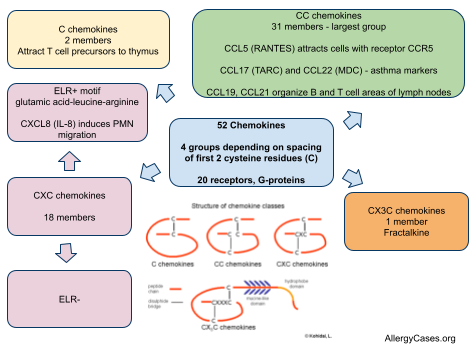
52 chemokines from 4 families have been described. They interact with 20 receptors (click here for a larger image).
Monocyte chemotactic protein-1 (MCP-1) is a small cytokine belonging to the CC chemokine family. According to the new nomenclature, MCP-1 is called chemokine (C-C motif) ligand 2 (CCL2).
A third cytokine called IP-10 also showed promise at differentiating between people who are infected and those who are not.
Interferon gamma-induced protein 10 kDa (IP-10) is also known as C-X-C motif chemokine 10 (CXCL10). It belongs to the CXC chemokine family.
These 3 cytokines could form the basis of a new test to quickly detect whether tuberculosis is dormant or active and infectious.
52 chemokines from 4 families have been described. They interact with 20 receptors (click here for a larger image).
References:
Tuberculosis. Stephen D Lawn MRCP, Prof Alimuddin I Zumla FRCP. The Lancet, Volume 378, Issue 9785, Pages 57 - 72, 2 July 2011.
Tuberculosis. Stephen D Lawn MRCP, Prof Alimuddin I Zumla FRCP. The Lancet, Volume 378, Issue 9785, Pages 57 - 72, 2 July 2011.
Xpert MTB/RIF is a rapid diagnostic test for tuberculosis with high sensitivity (90%) and specificity (99%). Lancet, 2011.
Image source: PPD, CDC, public domain.
Comments from Twitter:
@sdietrich17: How discouraging. We just keep going backwards with so many infectious diseases...
Wednesday, August 3, 2011
Hepatitis delta virus
 From a recent review in The Lancet:
Hepatitis delta virus (HDV) is a small, defective RNA virus that can infect only individuals who have hepatitis B virus (HBV). More than 15 million people are co-infected worldwide.
There are 8 genotypes of HDV. The hepatitis D virion is composed of a coat of HBV envelope proteins surrounding the nucleocapsid.
The nucleocapsid consists of:
- a single-stranded, circular RNA genome
- delta antigen, viral protein
HDV suppresses HBV replication but also causes severe liver disease with rapid progression to cirrhosis and hepatic decompensation (liver failure).
The range of clinical presentation is wide, varying from mild disease to fulminant liver failure.
Treatment of HDV is with pegylated interferon alfa; however, response rates are poor.
Better understanding of the molecular structure of HDV may lead to new therapeutic targets for this most severe form of chronic viral hepatitis.
References:
Hepatitis delta virus. Sarah A Hughes MBBCh, Heiner Wedemeyer MD, Dr Phillip M Harrison MD. The Lancet, Volume 378, Issue 9785, Pages 73 - 85, 2 July 2011.
Tuesday, August 2, 2011
Post-splenectomy and hyposplenism - Lancet review
The spleen links innate and adaptive immunity.
The impairment of splenic function is defined as hyposplenism. The term asplenia refers to the absence of the spleen, a condition that is rarely congenital and mostly post-surgical.

Spleen. Image source: National Cancer Institute and Wikipedia, public domain.
Complications of hyposplenism and asplenia
The impairment of splenic function is defined as hyposplenism. The term asplenia refers to the absence of the spleen, a condition that is rarely congenital and mostly post-surgical.

Spleen. Image source: National Cancer Institute and Wikipedia, public domain.

Complications of hyposplenism and asplenia
Hyposplenism and asplenia might predispose individuals to thromboembolic events. However, infectious complications are the most widely recognised consequences of these states.
Splenectomy and hyposplenism are associated with infections by encapsulated bacteria with high mortality, fulminant course, and refractoriness to common treatment.
Prevention through vaccination and antibiotic prophylaxis is the basis of management.
References:
Post-splenectomy and hyposplenic states. Antonio Di Sabatino MD, Rita Carsetti MD, Prof Gino Roberto Corazza MD. The Lancet, Volume 378, Issue 9785, Pages 86 - 97, 2 July 2011.
Splenectomy and hyposplenism are associated with infections by encapsulated bacteria with high mortality, fulminant course, and refractoriness to common treatment.
Prevention through vaccination and antibiotic prophylaxis is the basis of management.
References:
Post-splenectomy and hyposplenic states. Antonio Di Sabatino MD, Rita Carsetti MD, Prof Gino Roberto Corazza MD. The Lancet, Volume 378, Issue 9785, Pages 86 - 97, 2 July 2011.
Saturday, July 16, 2011
Twitter epidemics - BMJ video
BMJ medical innovations: During the swine flu pandemic, Google showed that it was able to track the spread using the searches that its users were making. In this video Dr Patty Kostkova shows her work using twitter - and how the data from that could be used to track future epidemics.
Related blog post from ScienceRoll:
"Do you remember when Google Flu Trends was announced to be able to track and predict flu outbreaks in US states based on the search queries focusing on flu symptoms? Do you remember when a study pointed out although it was interactive and neat but was not as useful as CDC national surveillance programs? Well, now Twitter is meant to fill this gap. If you ask me, it won’t."
Friday, July 1, 2011
Drug companies trying to "create" parasites for treating ulcerative colitis
 Ulcerative colitis, a type of inflammatory bowel disease (IBD), is less common in countries endemic for helminth infections, suggesting that helminth colonization may have the potential to regulate intestinal inflammation in IBD. Therapeutic effects of experimental helminth infection have been reported.
According to a researcher: "What we found was that after worm infection, the regions of the colon that were previously not making mucus, were now making mucus again."
"That's a key factor in healing, and it looked like the mucus came back because the worms were causing the body to produce IL-22. This is a molecule that promotes epithelial growth and healing."
Studies suggest parasites can regulate the immune system in ways that prevent it from "going wild" and attacking healthy tissue, and possibly human evolution took that into account.
A case report in the journal Science Translational Medicine provides a cellular and molecular portrait of dynamic changes in the intestinal mucosa of an individual who infected himself with Trichuris trichiura to treat his symptoms of ulcerative colitis.
Tissue with active colitis had a prominent population of mucosal T helper (TH) cells that produced the inflammatory cytokine interleukin-17 (IL-17) but not IL-22, a cytokine involved in mucosal healing.
After helminth exposure, the disease went into remission, and IL-22–producing TH cells accumulated in the mucosa. Genes involved in carbohydrate and lipid metabolism were up-regulated in helminth-colonized tissue, whereas tissues with active colitis showed up-regulation of proinflammatory genes such as IL-17, IL-13RA2, and CHI3L1.
T. trichiura colonization of the intestine may reduce symptomatic colitis by promoting goblet cell hyperplasia and mucus production through TH2 cytokines and IL-22. Controlled helminth infections may lead to new therapies for inflammatory bowel diseases.
References:
A case report in the journal Science Translational Medicine provides a cellular and molecular portrait of dynamic changes in the intestinal mucosa of an individual who infected himself with Trichuris trichiura to treat his symptoms of ulcerative colitis.
Tissue with active colitis had a prominent population of mucosal T helper (TH) cells that produced the inflammatory cytokine interleukin-17 (IL-17) but not IL-22, a cytokine involved in mucosal healing.
After helminth exposure, the disease went into remission, and IL-22–producing TH cells accumulated in the mucosa. Genes involved in carbohydrate and lipid metabolism were up-regulated in helminth-colonized tissue, whereas tissues with active colitis showed up-regulation of proinflammatory genes such as IL-17, IL-13RA2, and CHI3L1.
T. trichiura colonization of the intestine may reduce symptomatic colitis by promoting goblet cell hyperplasia and mucus production through TH2 cytokines and IL-22. Controlled helminth infections may lead to new therapies for inflammatory bowel diseases.
References:
Eat Your Worms: The Upside Of Parasites. NPR.
M. J. Broadhurst, J. M. Leung, V. Kashyap, J. M. McCune, U. Mahadevan, J. H. McKerrow, P. Loke, IL-22+ CD4+ T Cells Are Associated with Therapeutic Trichuris trichiura Infection in an Ulcerative Colitis Patient. Sci. Transl. Med. 2, 60ra88 (2010).
M. J. Broadhurst, J. M. Leung, V. Kashyap, J. M. McCune, U. Mahadevan, J. H. McKerrow, P. Loke, IL-22+ CD4+ T Cells Are Associated with Therapeutic Trichuris trichiura Infection in an Ulcerative Colitis Patient. Sci. Transl. Med. 2, 60ra88 (2010).
Helminth Trichuris suis (pig whipworm) had no effect as therapy for allergic rhinitis
Ulcerative Colitis - NEJM update, 2011.
Ulcerative Colitis - NEJM update, 2011.
Image source: Trichuris egg in stool sample (40x). Wikipedia, GNU Free Documentation License, Version 1.2.

Wednesday, June 15, 2011
A microscopic look at hotel hygiene makes a microbiologist travel with an impervious mattress cover
From CNN:
The microbiologist Philip Tierno doesn't feel comfortable staying in hotels. He knows too much. He travels with an impervious mattress and pillow cover to protect against the unseen debris that guests leave behind. When humans sleep they shed about 1.5 million cells an hour.
While the covers were developed for allergy sufferers, Tierno encourages everyone to use them at home and on the road.
And definitely ditch the bedspread, he advises. Hotel bedspreads became a hot topic when one featuring bodily fluids from several sources was introduced in boxer Mike Tyson's 1992 rape trial.
How hotels clean drinking glasses
An Atlanta TV station used hidden cameras to monitor how the drinking glasses in hotel rooms were cleaned. In one case, a housekeeper appeared to clean a toilet and the glasses wearing the same gloves. In multiple hotels, the glasses were rinsed in the sink and dried for the next guests, in violation of health codes.
The Health Magazine lists the 12 germiest places in America or the so called "dirty dozen":
A microscopic look at hotel hygiene, CNN, 2011.
The microbiologist Philip Tierno doesn't feel comfortable staying in hotels. He knows too much. He travels with an impervious mattress and pillow cover to protect against the unseen debris that guests leave behind. When humans sleep they shed about 1.5 million cells an hour.
While the covers were developed for allergy sufferers, Tierno encourages everyone to use them at home and on the road.
And definitely ditch the bedspread, he advises. Hotel bedspreads became a hot topic when one featuring bodily fluids from several sources was introduced in boxer Mike Tyson's 1992 rape trial.
How hotels clean drinking glasses
An Atlanta TV station used hidden cameras to monitor how the drinking glasses in hotel rooms were cleaned. In one case, a housekeeper appeared to clean a toilet and the glasses wearing the same gloves. In multiple hotels, the glasses were rinsed in the sink and dried for the next guests, in violation of health codes.
The Health Magazine lists the 12 germiest places in America or the so called "dirty dozen":
- Kitchen sink
- Airplane bathroom
- A load of wet laundry
- Public drinking fountain
- Shopping cart handle
- ATM buttons
- Playgrounds
- Bathtub
- Office phone
- Hotel-room remote
A microscopic look at hotel hygiene, CNN, 2011.
Monday, June 13, 2011
Acyclovir reduces risk of HIV-1 disease progression, if positive for HIV-1 and HSV-2
 Most people infected with HIV-1 are dually infected with herpes simplex virus type 2. Daily suppression of this herpes virus reduces plasma HIV-1 concentrations, but whether it delays HIV-1 disease progression is unknown.
In this study, the median CD4 cell count at enrollment was 462 cells per μL and median HIV-1 plasma RNA was 4 log10 copies per μL. Aciclovir reduced risk of HIV-1 disease progression by 16%.
The role of suppression of herpes simplex virus type 2 in reduction of HIV-1 disease progression before initiation of antiretroviral therapy warrants consideration.
References:
Daily aciclovir for HIV-1 disease progression in people dually infected with HIV-1 and herpes simplex virus type 2: a randomised placebo-controlled trial. The Lancet, Volume 375, Issue 9717, Pages 824 - 833, 6 March 2010.
Image source: Diagram of HIV. Image source: Wikipedia.
Wednesday, May 11, 2011
Automatic tracker ensures your doctor washed their hands
The University of Illinois Medical Center has installed a system called HyGreen (Hand Hygiene Recording and Reminding System) which acts as a reminder to health care workers before they ever enter a patient's room.
The provider begins by cleaning his hands, then placing them under a sensor that recognizes the cleaning, and transmits a signal to a badge the provider is wearing. When they walk into the patient's room, that badge transmits an "all clean" signal to a sensor above the bed.
If a caregiver walks into a room without washing their hands, the sensor won't get that all clean signal and the badge will start buzzing.
References:
Tech Ensures Your Doc Washed Their Hands. NBC Chicago.
Tuesday, March 29, 2011
Managing fever of unknown origin in adults - BMJ review
 Few clinical problems generate such a wide differential diagnosis as pyrexia (fever) of unknown origin. The initial definition proposed by Petersdorf and Beeson in 1961 was later revised. Essentially the term refers to a prolonged febrile illness without an obvious cause despite reasonable evaluation and diagnostic testing.
Definition
Classic adult fever of unknown origin (FUO) is fever of 38.3°C (101°F) or greater for at least 3 weeks with no identified cause after 3 days of hospital evaluation or 3 outpatient visits
Causes of FUO
Common causes of FUO are infections, neoplasms, and connective tissue disorders.
Investigations almost always include imaging studies. Serological tests may be indicated
Treatment of FUO
Empirical antibiotics are warranted only for individuals who are clinically unstable or neutropenic. In stable patients empirical treatment is discouraged, although NSAIDs may be used after investigations are complete. Empirical corticosteroid therapy is discouraged.
References:
Empirical antibiotics are warranted only for individuals who are clinically unstable or neutropenic. In stable patients empirical treatment is discouraged, although NSAIDs may be used after investigations are complete. Empirical corticosteroid therapy is discouraged.
References:
Investigating and managing pyrexia of unknown origin in adults. BMJ 2010; 341:c5470 doi: 10.1136/bmj.c5470 (Published 15 October 2010).
Image source: Wikipedia, public domain.
Wednesday, March 16, 2011
Oropharyngeal carcinoma increased by 22% in 6 years, related to rise in HPV
 Head and neck cancer is the sixth most common cancer. Despite an overall marginal decline in the incidence of most head and neck cancers in recent years, the incidence of oropharyngeal squamous cell carcinoma has increased greatly, especially in the developed world.
In the United States, the incidence of oropharyngeal squamous cell carcinoma increased by 22% between 1999 and 2006.
The increase in incidence of oropharyngeal squamous cell carcinoma seems to be accounted for by a rise in human papillomavirus (HPV) related oropharyngeal carcinoma.
References:
Oropharyngeal carcinoma related to human papillomavirus. BMJ 2010; 340:c1439 doi: 10.1136/bmj.c1439 (Published 25 March 2010).
Image source: HPV types and associated diseases, Wikipedia, public domain.

Twitter comments:
@travispew (Travis Pew): So get your kids the HPV shot.
Wednesday, February 23, 2011
Acute bronchitis: Many patients expect to be treated with antibiotics and cough meds but this differs from guidelines

Mind map of differential diagnosis of cough. See more Allergy and Immunology mind maps here.
Cough is the most common symptom bringing patients to the primary care physician's office. The most common diagnosis in these patients is acute bronchitis, according to a recent review in the official journal of AFP, American Family Physician.
Acute bronchitis should be differentiated from other common causes of cough such as pneumonia and asthma - because the therapies are clearly different.
Symptoms of acute bronchitis typically last 3 weeks. As we already know, the presence of colored (e.g., yellow or green) sputum does not reliably differentiate between bacterial and viral lower respiratory tract infections. This conclusion was contradicted by a recent study: Green or yellow phlegm likely to be bacterial - confirming beliefs by doctors and patients alike (http://goo.gl/zff8X and http://goo.gl/cwKGs).
Viruses cause more than 90% of acute bronchitis, and therefore, antibiotics are generally not indicated. They should be used only if pertussis is suspected to reduce transmission or if the patient is at increased risk of developing pneumonia (e.g., patients 65 years or older).
The typical therapies that have been traditionally used for managing acute bronchitis symptoms have been shown to be ineffective. The U.S. Food and Drug Administration recommends against using cough and cold preparations in children younger than 6 years.
The supplement pelargonium may help reduce symptom severity in adults.
Many patients expect to be treated with antibiotics and cough medications but this differs from evidence-based recommendations.
The CNN video below tries to decipher what hides behind the names of common cough and cold medications:
References:
Diagnosis and treatment of acute bronchitis. Albert RH. Am Fam Physician. 2010 Dec 1;82(11):1345-50.
Sunday, January 16, 2011
Diagnosing tuberculosis with cytokines IL-15, IL-10 and MCP-1, in addition to interferon-gamma
A pattern of two cytokines, called MCP-1 and IL-15, was reasonably good at differentiating between persons sick with TB and persons infected but not sick.
A third cytokine called IP-10 also showed promise at differentiating between people who are infected and those who are not.
These 3 cytokines could form the basis of a new test to quickly detect whether tuberculosis is dormant or active and infectious.
52 chemokines from 4 families have been described. They interact with 20 receptors (click here for a larger image).
Monocyte chemotactic protein-1 (MCP-1) is a small cytokine belonging to the CC chemokine family. According to the new nomenclature, MCP-1 is called chemokine (C-C motif) ligand 2 (CCL2).
A third cytokine called IP-10 also showed promise at differentiating between people who are infected and those who are not.
Interferon gamma-induced protein 10 kDa (IP-10) is also known as C-X-C motif chemokine 10 (CXCL10). It belongs to the CXC chemokine family.
These 3 cytokines could form the basis of a new test to quickly detect whether tuberculosis is dormant or active and infectious.
52 chemokines from 4 families have been described. They interact with 20 receptors (click here for a larger image).
What is the difference between cytokine, interleukin and chemokine?
Cytokines (Greek cyto-, cell; and -kinos, movement) are substances secreted by cells of the immune system which carry signals locally between cells. They are proteins, peptides, or glycoproteins.
Interleukins are a group of cytokines first found to be expressed by white blood cells (leukocytes). The name is a misnomer since interleukins are produced by a wide variety of cells, not only leukocytes.
Chemokines (Greek -kinos, movement) are a family of small cytokines, or proteins secreted by cells. The name is derived from their ability to induce directed chemotaxis in nearby responsive cells; they are chemotactic cytokines.
Xpert MTB/RIF is a rapid diagnostic test for tuberculosis with high sensitivity (90%) and specificity (99%). Lancet, 2011.
Friday, December 17, 2010
Sitting on a patient’s bed, by visitors or doctors, is prohibited by infection control
 Iona Heath, general practitioner from London comments on this issue in BMJ:
"I learnt recently from senior nursing colleagues that sitting on a patient’s bed, by either visitors or clinicians, is now also prohibited, apparently in the interests of infection control. A quick internet search of "sitting on the bed" and "infection control" produces a huge list of leaflets from a variety of hospitals, each reinforcing the prohibition.
Doctors should never be discouraged from sitting, because patients consistently estimate that they have been given more time when the doctor sits down rather than stands. Standing makes the conversation seem hurried even when it is not; and, in the hospital setting, sitting on the chair does not seem to work nearly as well, because the levels are somehow all wrong."
Sitting on a chair next to the patient's bed is the best approach.
References:
Do not sit on the bed -- Heath 340: c1478 -- BMJ.
References:
Do not sit on the bed -- Heath 340: c1478 -- BMJ.
Image source: OpenClipArt.org, public domain.
Thursday, December 2, 2010
Low risk of transmission of influenza on the plane: 3.5% if sitting within 2 rows of infected passengers
 This BMJ study assessed the risk of transmission of pandemic A/H1N1 2009 influenza (pandemic A/H1N1) from an infected high school group to other passengers on an airline flight and the effectiveness of screening and follow-up of exposed passengers.
The design was a retrospective cohort investigation using a questionnaire administered to passengers and laboratory investigation of those with symptoms.
The setting was in Auckland, New Zealand, with national and international follow-up of passengers. The participants were passengers seated in the rear section of a Boeing 747-400 long haul flight that arrived on 25 April 2009, including a group of 24 students and teachers and 97 (out of 102) other passengers in the same section of the plane who agreed to be interviewed.
9 members of the school group were laboratory confirmed cases of pandemic A/H1N1 infection and had symptoms during the flight. Two other passengers developed confirmed pandemic A/H1N1 infection. Their seating was within two rows of infected passengers, implying a risk of infection of about 3.5% for the 57 passengers in those rows.
A low but measurable risk of transmission of pandemic A/H1N1 exists during modern commercial air travel. This risk is concentrated close to infected passengers with symptoms.
Video: "How to Sneeze" Demonstrated by the U.S. Health and Human Services Secretary Kathleen Sebelius. She shows NBC’s Chuck Todd the “Elmo way” to sneeze.
Don't forget to get your influenza immunization (flu shot or spray) this season. The CDC video embedded below clearly explains why this is extremely important.
CDC video: Why Flu Vaccination Matters: Personal Stories from Families Affected by Flu.
CDC video: Why Flu Vaccination Matters: Personal Stories from Families Affected by Flu.
References:
Transmission of pandemic A/H1N1 2009 influenza on passenger aircraft: retrospective cohort study. BMJ 2010; 340:c2424 doi: 10.1136/bmj.c2424 (Published 21 May 2010).
Diagram of influenza virus nomenclature. Image source: Wikipedia, GNU Free Documentation License.

Wednesday, December 1, 2010
Monday, October 18, 2010
Gonorrhea Getting Harder to Treat - Antibiotic Resistance Pushing Gonorrhea Toward Superbug Status
Gonorrhea is a common sexually transmitted bacterial infection. If left untreated, gonorrhea can lead to pelvic inflammatory disease, ectopic pregnancy, and infertility in women. Treatment for gonorrhea usually consists of a single dose of one of two antibiotics, cefixime or ceftriaxone.
The current drugs of choice, ceftriaxone and cefixime, are still very effective but there are signs that resistance, particularly to cefixime, is emerging and soon these drugs may not be a good choice.
Only one remaining class of antibiotics is recommended for the treatment of gonorrhea - cephalosporins. Historically, gonorrhea has progressively developed resistance to the antibiotic drugs prescribed to treat it. Thus, it is critical to continuously monitor antibiotic resistance in Neisseria gonorrhoeae.
As a side note that highlights the prevalence of the problem, there are at least 10 songs titled "Gonorrhea" by various artists in the Amazon.com MP3 music store.
CDCStreamingHealth | April 16, 2010: This video, produced by Be Smart. Be Well., raises awareness of Sexually Transmitted Diseases (STDs): 1) What are they? 2) Why they matter? and, 3) What can I do about them? Footage courtesy of Be Smart. Be Well. http://www.besmartbewell.com, featuring CDC's Dr. John Douglas, Division of Sexually Transmitted Disease Prevention.
References:
The current drugs of choice, ceftriaxone and cefixime, are still very effective but there are signs that resistance, particularly to cefixime, is emerging and soon these drugs may not be a good choice.
Only one remaining class of antibiotics is recommended for the treatment of gonorrhea - cephalosporins. Historically, gonorrhea has progressively developed resistance to the antibiotic drugs prescribed to treat it. Thus, it is critical to continuously monitor antibiotic resistance in Neisseria gonorrhoeae.
As a side note that highlights the prevalence of the problem, there are at least 10 songs titled "Gonorrhea" by various artists in the Amazon.com MP3 music store.
CDCStreamingHealth | April 16, 2010: This video, produced by Be Smart. Be Well., raises awareness of Sexually Transmitted Diseases (STDs): 1) What are they? 2) Why they matter? and, 3) What can I do about them? Footage courtesy of Be Smart. Be Well. http://www.besmartbewell.com, featuring CDC's Dr. John Douglas, Division of Sexually Transmitted Disease Prevention.
References:
Sexually Transmitted Diseases (STDs) - Diagnosis and Management Slideshow from Medscape http://goo.gl/uzwA
Subscribe to:
Posts (Atom)