Showing posts with label Dentistry. Show all posts

Monday, September 12, 2011

Oral symptoms of systemic diseases - what to suspect?


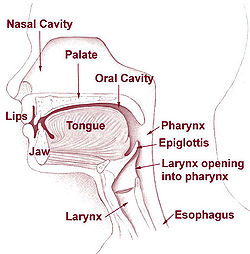
Examination of the oral cavity (mouth) may reveal findings pointing to an underlying systemic condition, and allow for early diagnosis and treatment.

Oral examination should include evaluation for:

- mucosal changes
- periodontal inflammation and bleeding
- condition of the teeth

Examples of lesions:

- Oral findings of anemia may include mucosal pallor, atrophic glossitis, and candidiasis.

- Oral ulceration may be found in patients with lupus erythematosus (SLE), pemphigus vulgaris, or Crohn disease. Oral manifestations of lupus erythematosus may include honeycomb plaques (silvery white, scarred plaques); raised keratotic plaques (verrucous lupus erythematosus); erythema, purpura, petechiae, and cheilitis.

Oral findings in patients with Crohn disease may include diffuse mucosal swelling, cobblestone mucosa, and localized mucogingivitis.

- Diffuse melanin pigmentation may be an early manifestation of Addison disease.

- Periodontal inflammation or bleeding should prompt investigation of conditions such as diabetes mellitus, human immunodeficiency virus (HIV) infection, thrombocytopenia, and leukemia.

- In patients with gastroesophageal reflux disease (GERD), bulimia, or anorexia, exposure of tooth enamel to acidic gastric contents may cause irreversible dental erosion. Severe erosion may require dental restoration. 

- In patients with pemphigus vulgaris, thrombocytopenia, or Crohn disease, oral changes may be the first sign of disease.

References:
Oral manifestations of systemic disease. Chi AC, Neville BW, Krayer JW, Gonsalves WC. Am Fam Physician. 2010 Dec 1;82(11):1381-8.
Image source: Head and neck. Wikipedia, public domain.

Wednesday, March 16, 2011

Oropharyngeal carcinoma increased by 22% in 6 years, related to rise in HPV

Head and neck cancer is the sixth most common cancer. Despite an overall marginal decline in the incidence of most head and neck cancers in recent years, the incidence of oropharyngeal squamous cell carcinoma has increased greatly, especially in the developed world.

In the United States, the incidence of oropharyngeal squamous cell carcinoma increased by 22% between 1999 and 2006.

The increase in incidence of oropharyngeal squamous cell carcinoma seems to be accounted for by a rise in human papillomavirus (HPV) related oropharyngeal carcinoma.

References:

Oropharyngeal carcinoma related to human papillomavirus. BMJ 2010; 340:c1439 doi: 10.1136/bmj.c1439 (Published 25 March 2010).
Image source: HPV types and associated diseases, Wikipedia, public domain.

Twitter comments:

@travispew (Travis Pew): So get your kids the HPV shot.

Friday, February 18, 2011

People who brush their teeth less than twice a day have a 70% increased risk of heart disease

A Scottish national population based survey examined if self reported toothbrushing behaviour is associated with cardiovascular disease and markers of inflammation (C reactive protein) and coagulation (fibrinogen).

Participants were 12,000 men and women, mean age 50. Oral hygiene was assessed from self reported frequency of toothbrushing. There were a total of 555 cardiovascular disease events over an average of 8 years of follow-up, of which 170 were fatal.

Participants who reported poor oral hygiene (never/rarely brushed their teeth) had an increased risk of a cardiovascular disease event (hazard ratio 1.7).

They also had increased concentrations of both C reactive protein and fibrinogen.

Poor oral hygiene is associated with higher levels of risk of cardiovascular disease and low grade inflammation, though the causal nature of the association is yet to be determined.

References:
Toothbrushing, inflammation, and risk of cardiovascular disease: results from Scottish Health Survey. BMJ 2010;340:c2451.
Image source: Cross-section of a tooth with visible gums, or gingiva, Wikipedia, GNU Free Documentation License.

Monday, January 17, 2011

Invasive dental treatment associated with increased risk for stroke and myocardial infarction

Treatment of periodontal disease may reduce cardiovascular risk in the longer term, but studies have suggested a link among dental procedures, acute inflammation, and endothelial dysfunction.

This study included persons exposed to invasive dental treatment with a primary hospital discharge diagnosis of ischemic stroke or myocardial infarction from 2002 to 2006.

The rate of vascular events significantly increased in the first 4 weeks after invasive dental treatment (incidence ratio, 1.50) and gradually returned to the baseline rate within 6 months.

Invasive dental treatment may be associated with a transient increase in the risk for vascular events. However, the absolute risks are minimal, and the long-term benefits on vascular health will probably outweigh the short-lived adverse effects.

References:Image source: Cross-section of a tooth with visible gums, or gingiva, Wikipedia, GNU Free Documentation License.

Saturday, January 8, 2011

Too much of a good thing? Excess fluoride in water supply causes dental problems


For the first time in nearly 50 years, the government is recommending lowering the fluoride in drinking water. Officials say many Americans are getting too much fluoride and it's causing some kids to have "splotchy" teeth. The AP's Kelly Daschle reports.

The US health department is recommending that water supplies contain 0.7 milligrams of fluoride per liter of water, replacing the current recommended range of 0.7 to 1.2 milligrams.

Learn how much fluoride is in your tap water. Call your local water municipality because the level varies from city to city. If it's above 0.7 milligrams per liter, you could consider filtering your water.

References:
U.S. Wants to Reduce Fluoride in Drinking Water. WebMD.

Wednesday, October 13, 2010

The Dentist Of Jaipur (4-minute documentary)


"The Dentist Of Jaipur" - "New teeth, dentures or extractions not a problem at all for Pushkar and his old master Pyara Singh. They treat their patients in front of the train station of Jaipur, on the sidewalk under the pure sky. The short film of filmmaker Falk Peplinski, who has been living in India for three years, is an ironical image-clip for a dentist of its own kind and therefore a homage to the incredibleness of the Indian everyday life. The film had a big success at fim festivals in 2006 and 2007. India, 2006, director & editor: Falk Peplinski, photography: Karsten Hohmann, sound: Valson P.D., producer: Meera Menezes."

Warning: The video contains images that some viewers may find disturbing.


View Larger Map