Showing posts with label BMJ. Show all posts

Thursday, April 12, 2012

Will traditional scientific journals follow newspapers into oblivion, asks former BMJ editor

Richard Smith is a former editor of the BMJ and chief executive of the BMJ Publishing Group. He is well-known for provocative editorials. Here is an excerpt from one, published recently in The Scientist:

"Elsevier, the world’s largest publisher of scientific journals, has seen broadly stable revenues (€2,236 million in 2006, €2,370 million in 2010) but growing profits (€683 million in 2006, €847 million in 2010).

Scientific journals remain very profitable. Few industries manage a profit margin of 35.7% (that for Elsevier in 2010), but then few industries are given their raw material—in this case, scientific studies—not only for free, but also in a form that needs minimal processing."

It is nice to see that the current and a former editor of the two most famous British medical journals, The Lancet and BMJ, are now on Twitter:


References:

Reading Into the Future | The Scientist, 2012.

Wednesday, March 21, 2012

Motion sickness - what to do?

From a 2011 BMJ review:

Travel by car, train, or other transport is part of everyday life for most people, and therefore motion sickness is a quite common problem. It was recognized in the early days of sea travel and the word for sickness, “nausea,” derives from the Greek word νανς, meaning “ship.”

Motion sickness is also a potentially disabling problem, thought to be due to sensory conflict or “mismatch” involving the vestibular system.

Symptoms can be provoked by:

- externally imposed motion
- implied self motion from a moving visual field, such as in a cinema

Symptoms

Motion sickness manifests with:

- nausea, vomiting, and stomach awareness
- increased salivation
- belching
- pallor
- sweating
- headache
- dizziness
- apathy, drowsiness, and malaise
- hyperventilation

Habituation

Behavioral treatments such as habituation can be effective but at the same time they can be unpleasant and time consuming

Hyoscine

Hyoscine is an effective preventive medication. There are oral forms and transdermal patches. Hyoscine nasal spray is also effective in preventing motion sickness

Evidence to support the use of other drugs is weaker, especially taking into account the trade off between efficacy and adverse effects. Traditional remedies such as ginger and acupressure bands have not been effective.

References:

Managing motion sickness. BMJ Review 2011; 343 doi: 10.1136/bmj.d7430
Image source: OpenClipArt.org, public domain.

Tuesday, February 21, 2012

Beethoven's deafness and his three styles (video)

That Beethoven suffered from deafness is well known, but how did the progression of the condition affect his composition? In this 8-minute video the Isola string quartet demonstrate how his style changed over time:

Read about the science behind the video in the paper, Beethoven's deafness and his three styles, from BMJ.


Switch to lower notes

Details of Beethoven’s hearing loss can be derived from his own letters. His left ear was affected first, and he reported bilateral tinnitus, high tone hearing loss associated with poor speech discrimination, and recruitment with loud noises. After 1812 people had to shout to make themselves understood.

In 1818 Beethoven started to communicate through notebooks.

There are no reports that he could still understand spoken conversation after 1825, and his deafness was almost complete by then.

The symptoms suggest a sensorineural hearing loss with its origin in the organ of Corti.

The BMJ article claims that Beethoven's progressive deafness shaped his later musical style as he switched to lower notes as he had difficulty hearing higher ones.

Lead poisoning

The famous composer's health has been a focus of research in recent years. "Lead poisoning made Beethoven grumpy", summarized Chicago-Sun Times profoundly in 2005.

Asthma

In addition to a number of other chronic diseases, Beethoven apparently had asthma too. He is listed among the "Faces of Asthma", on the "Breath of Life" website maintained by the NLM.

References:

Beethoven’s deafness. BMJ 2011; 343 doi: 10.1136/bmj.d7589 (Published 20 December 2011). Cite this as: BMJ 2011;343:d7589
Noise Chart as It Relates to Hearing Damage and Hearing Loss http://goo.gl/tjZh1

Monday, February 6, 2012

Osteoarthritis at the base of the thumb has a 15-30% prevalence in adults

What is it?

Patients with osteoarthritis of the thumb carpometacarpal joint, or base of the thumb, commonly seek help for their symptoms. Arthritis at the base of the thumb causes functional disability and pain, particularly with “pinching” actions.


A hand with arthritic changes. Image source: Cicadas, a Creative Commons license.

How common is osteoarthritis of the thumb?

The prevalence of this condition increases with age and is greatest in postmenopausal women. It ranges between 15% prevalence in adults in Finland and a 33% prevalence in postmenopausal women. This is likely to increase as populations age and people stay active for longer.

How to diagnose it?

Pain reproduced on the axial grind test localizes pathology to the base of the thumb.

Trapeziometacarpal and scaphotrapeziotrapezoid joints should be assessed with plain radiographs (X-rays) that typically show degenerative changes. However, X-rays may underestimate the extent of the disease.

What to do?

Non-operative treatments can ameliorate symptoms and delay surgery in most patients with osteoarthritis of the thumb:

- behaviour modification
- pain relief
- splinting
- corticosteroid injections

No single operative procedure has been shown to be superior:

- simple trapeziectomy has the lowest complication rate
- arthrodesis may be the best option for patients who value pain relief and reliable strength and stability more than mobility (such as younger manual workers)

Piano lesson: "Rachmaninov had big hands". See how one gets 4 million views on YouTube:


References:

Osteoarthritis at the base of the thumb. BMJ, 2011.

Tuesday, January 10, 2012

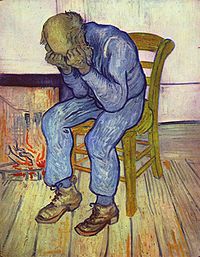
Depression treatment is as effective in older (over 65) as in younger adults

Depression in later life, traditionally defined as age older than 65, is associated with disability, increased mortality, and poorer outcomes.

Compared to younger adults with depression:

- cognitive and functional impairment and anxiety are more common in older adults

- older adults with depression are at increased risk of suicide

Depression is associated with cognitive impairment and an increased risk of dementia.

A selective serotonin reuptake inhibitor (SSRI) should be the first line pharmacological treatment for depression for most older adults.

Psychological and drug treatment is as effective in older as in younger adults

References:

Depression in older adults. Rodda et al. BMJ, 2011.

Image source: Vincent van Gogh's 1890 painting At Eternity's Gate. Wikipedia, public domain.

Friday, December 2, 2011

Headache subtypes: 30-year prospective cohort study

This BMJ study included 590 people aged 19-20 from a cohort of 4,500 residents of Zurich, Switzerland, interviewed 7 times across 30 years of follow-up.

The one-year prevalence of subtypes of headache were:

- 1% (female:male ratio of 2.8) for migraine with aura
- 11% (female:male ratio of 2.2) for migraine without aura
- 11% (female:male ratio of 1.2) for tension-type headache

The cumulative 30-year prevalence of headache subtypes were:

- 3% for migraine with aura
- 36% for migraine without aura
- 29% for tension-type headache

Despite the high prevalence of migraine without aura, most cases were transient and only 20% continued to have migraine for more than half of the follow-up period.

There was a substantial crossover among the subtypes and no specific pattern of progression.

The longitudinal overlap among subtypes of headache shows the developmental heterogeneity of headache syndromes.

References:

Magnitude, impact, and stability of primary headache subtypes: 30 year prospective Swiss cohort study. BMJ, 2011.

Image source: Openclipart.org, public domain.

Monday, November 28, 2011

Acute altitude illnesses

This summary is based on a recent BMJ review:

Acute altitude illnesses include:

- high altitude headache
- acute mountain sickness
- high altitude cerebral edema
- high altitude pulmonary edema

Typical scenarios in which such illness occurs include:

- a family trek to Everest base camp in Nepal (5,360 m)
- a fund raising climb of Mount Kilimanjaro (5,895 m), shown in the map below
- a tourist visit to Machu Picchu (2,430 m)


View Larger Map

High altitude headache and acute mountain sickness often occur a few hours after arrival at altitudes over 3,000 meters.

Occurrence of acute mountain sickness is reduced by slow ascent. Severity can be modified by prophylactic acetazolamide.

Mild to moderate acute mountain sickness usually resolves with:

- rest
- hydration
- halting ascent
- analgesics

Occasionally people with acute mountain sickness develop high altitude cerebral oedema with confusion, ataxia, persistent headache, and vomiting.

Severe acute mountain sickness and high altitude cerebral edema require urgent treatment with:

- oxygen if available
- dexamethasone
- possibly acetazolamide
- rapid descent

High altitude pulmonary edema is a rare but potentially life threatening condition that occurs 1-4 days after arrival at altitudes above 2,500 meters. Treatment includes oxygen if available, nifedipine, and rapid descent to lower altitude.

What do extreme athletes who can summit the peaks of Mt. Everest have in common with people with heart failure? This Mayo Clinic video explains it:


References:

Clinical Review: Acute altitude illnesses. BMJ 2011; 343:d4943 doi: 10.1136/bmj.d4943

Tuesday, November 1, 2011

BMJ, the first medical journal to launch a website in 1996, shows a blog-like redesign

See the video here: Make the most of the new bmj.com. Editor-in-Chief Fiona Godlee and David Payne explain the redesigned bmj.com website, and some of the new features:


And, of course, you can follow BMJ on:

- Twitter
twitter.com/bmj_latest

- Facebook
facebook.com/bmjdotcom

- YouTube
youtube.com/user/BMJmedia

References:

Welcome to the new design. BMJ.

Monday, October 3, 2011

Authorship criteria - use or abuse?

From BMJ:

A case described 5 surgeons who were working in a hospital and using a similar technique to operate on their patients. Surgeon B left the academy after a while to work in the private sector. Surgeon A decided to write a manuscript about their experiences and was the first author. Surgeons C, D, and E were named in the byline of the manuscript, but surgeon B was excluded. The question is whether surgeon B can claim to be an author of the article as well.

Using the International Committee of Medical Journal Editors (ICMJE) guideline without considering the ethical aspects of people’s contributions may lead to this guideline being abused, which is worse than not having any guideline at all.

References:

Behrooz Astaneh: Authorship criteria – use or abuse

Tuesday, September 13, 2011

Insulin is one of the top 10 high risk medications worldwide for prescription errors

Insulin has been identified as one of the top 10 high risk medicines worldwide. Errors are common - the first national audit in England and Wales showed prescribing errors in 19.5% of cases.

Not only are mistakes common, they often lead to harm - 3% of medication errors are related to insulin, but these errors were also twice as likely to cause harm as errors for other prescribed drugs.

Errors relating to insulin arise because insulin has a narrow therapeutic range and requires precise dose adjustments with careful administration and monitoring.

Over 20 different types of insulin are in use, in various strengths and forms, and with a range of delivery devices, including insulin syringes (from vials), insulin pens (prefilled or reusable), or infusion pumps.

References:

Safer administration of insulin: summary of a safety report from the National Patient Safety Agency. BMJ 2010; 341:c5269 doi: 10.1136/bmj.c5269 (Published 13 October 2010).

Image source: Wikipedia, public domain.

Thursday, September 8, 2011

Biobank - BMJ video


BMJ medical innovations: When it comes to doing epidemiological studies, numbers matter. We find out about the UK's biobank - a project to collect information and samples from 500,000 volunteers, which should help scientists look for links between lifestyle and health.

Saturday, July 16, 2011

Twitter epidemics - BMJ video


BMJ medical innovations: During the swine flu pandemic, Google showed that it was able to track the spread using the searches that its users were making. In this video Dr Patty Kostkova shows her work using twitter - and how the data from that could be used to track future epidemics.

Related blog post from ScienceRoll:

"Do you remember when Google Flu Trends was announced to be able to track and predict flu outbreaks in US states based on the search queries focusing on flu symptoms? Do you remember when a study pointed out although it was interactive and neat but was not as useful as CDC national surveillance programs? Well, now Twitter is meant to fill this gap. If you ask me, it won’t."

Thursday, June 16, 2011

Memorable medical textbooks of the past

Medical textbooks were not always as dreary and as bland as they are now, according to BMJ. Some examples of lively, first person didactic tone come from J L Burton’s Essentials of Dermatology:

"The Lord Privy Seal is neither a lord, nor a privy, nor a seal" and "‘seborrhoeic’ warts have no relationship to seborrhoea."

"The simultaneous occurrence of scabies in a doctor and a nurse may mean that they have shared nothing more exciting than a patient with Norwegian scabies."

Explanation:

The Lord Privy Seal (or, more formally, the Lord Keeper of the Privy Seal) is the fifth of the Great Officers of State in the United Kingdom. Originally, its holder was responsible for the monarch's personal (privy) seal (as opposed to the Great Seal of the Realm). Though one of the oldest offices in government anywhere, it has no particular function today.

Seborrhoeic keratosis (seborrhoeic wart, basal cell papilloma) is a benign overgrowth of the basal cells of the epidermis. The patient is usually elderly and concerned because the lesion is unsightly.

References:
Image source: Seborrheic keratosis, Wikipedia, GNU Free Documentation License, Version 1.2.

Tuesday, June 7, 2011

CPAP for sleep apnea - BMJ video


BMJ: Sleep apnoea (apnea, in its American spelling) is a condition that causes a patient to stop breathing for short periods during their sleep. In this video researchers Joaquín Durán-Cantolla and Jose María Montserrat discuss their work into the use of CPAP (continuous positive airway pressure) to treat the condition.

People with OSA may be twice as likely to develop a stroke.

Did you know that obstructive sleep apnea (OSA) can reduce a child’s IQ by as many as 10 points, while treatment in children with OSA can improve school grades?

Related:
Mavs Fan at the Finals - Photos - SI.com http://goo.gl/tIdL3

Tuesday, March 29, 2011

Managing fever of unknown origin in adults - BMJ review

Few clinical problems generate such a wide differential diagnosis as pyrexia (fever) of unknown origin. The initial definition proposed by Petersdorf and Beeson in 1961 was later revised. Essentially the term refers to a prolonged febrile illness without an obvious cause despite reasonable evaluation and diagnostic testing.

Definition

Classic adult fever of unknown origin (FUO) is fever of 38.3°C (101°F) or greater for at least 3 weeks with no identified cause after 3 days of hospital evaluation or 3 outpatient visits

Causes of FUO

Common causes of FUO are infections, neoplasms, and connective tissue disorders.

Investigations almost always include imaging studies. Serological tests may be indicated

Treatment of FUO

Empirical antibiotics are warranted only for individuals who are clinically unstable or neutropenic. In stable patients empirical treatment is discouraged, although NSAIDs may be used after investigations are complete. Empirical corticosteroid therapy is discouraged.

References:
Investigating and managing pyrexia of unknown origin in adults. BMJ 2010; 341:c5470 doi: 10.1136/bmj.c5470 (Published 15 October 2010).
Image source: Wikipedia, public domain.

Wednesday, March 16, 2011

Oropharyngeal carcinoma increased by 22% in 6 years, related to rise in HPV

Head and neck cancer is the sixth most common cancer. Despite an overall marginal decline in the incidence of most head and neck cancers in recent years, the incidence of oropharyngeal squamous cell carcinoma has increased greatly, especially in the developed world.

In the United States, the incidence of oropharyngeal squamous cell carcinoma increased by 22% between 1999 and 2006.

The increase in incidence of oropharyngeal squamous cell carcinoma seems to be accounted for by a rise in human papillomavirus (HPV) related oropharyngeal carcinoma.

References:

Oropharyngeal carcinoma related to human papillomavirus. BMJ 2010; 340:c1439 doi: 10.1136/bmj.c1439 (Published 25 March 2010).
Image source: HPV types and associated diseases, Wikipedia, public domain.

Twitter comments:

@travispew (Travis Pew): So get your kids the HPV shot.

Thursday, March 10, 2011

Investigating easy bruising in a child

From BMJ:

In a child, unusual bruising or bleeding out of proportion to the injury sustained should be investigated.

All children under investigation for easy bruising or a bleeding tendency should have:

- full blood count
- blood film (peripheral smear)
- coagulation screen including a thrombin time, in addition to a Von Willebrand factor assay and assays of factors VIII and IX

This is to ensure that mild forms of haemophilia are excluded even if the activated partial thromboplastin time is normal

In 30% of cases of haemophilia, there is no family history: it arises secondary to new genetic mutations


The coagulation cascade. Black arrow - conversion/activation of factor. Red arrows - action of inhibitors. Blue arrows - reactions catalysed by activated factor. Grey arrow - various functions of thrombin. Image source: Wikipedia

References:
Investigating easy bruising in a child. Anderson and Thomas 341, BMJ.

Tuesday, March 8, 2011

There are 25,400 scientific journals and their number is increasing by 3.5% a year

More scientific and medical papers are being published now than ever before. Is it possible to be an expert nowadays, asks BMJ.

Every doctor has an ethical duty to keep up to date. Is this just getting more difficult or has it already become impossible? Since Alvin Toffler coined the phrase “information overload” in 1970, the growth of scientific and medical information has been inexorable.

There are now 25 400 journals in science, technology, and medicine, and their number is increasing by 3.5% a year; in 2009, they published 1.5 million articles. PubMed now cites more than 20 million papers.

One response of the medical profession to the increasing scientific basis and clinical capacity of medicine has been to increase subspecialisation. This may restrict the breadth of knowledge of the ultraspecialist, but can such subspecialists still maintain their depth of expertise?

I described my approach in 5 Tips to Stay Up-to-Date with Medical Literature:

1. RSS Feeds for Medical Journals.
2. Podcasts.
3. Persistent Searches on PubMed, Google News and Google.
4. Text-to-speech (TTS) for journal articles.
5. Blogs and Twitter accounts.

If you have a blog or Twitter account, you can try to deal with the information overload from blogs, RSS and Twitter more efficiently by using this:


The circle of online information (click to enlarge).

References:
On the impossibility of being expert. BMJ 2010; 341:c6815 doi: 10.1136/bmj.c6815.

Thursday, December 2, 2010

Low risk of transmission of influenza on the plane: 3.5% if sitting within 2 rows of infected passengers

This BMJ study assessed the risk of transmission of pandemic A/H1N1 2009 influenza (pandemic A/H1N1) from an infected high school group to other passengers on an airline flight and the effectiveness of screening and follow-up of exposed passengers.

The design was a retrospective cohort investigation using a questionnaire administered to passengers and laboratory investigation of those with symptoms.

The setting was in Auckland, New Zealand, with national and international follow-up of passengers. The participants were passengers seated in the rear section of a Boeing 747-400 long haul flight that arrived on 25 April 2009, including a group of 24 students and teachers and 97 (out of 102) other passengers in the same section of the plane who agreed to be interviewed.

9 members of the school group were laboratory confirmed cases of pandemic A/H1N1 infection and had symptoms during the flight. Two other passengers developed confirmed pandemic A/H1N1 infection. Their seating was within two rows of infected passengers, implying a risk of infection of about 3.5% for the 57 passengers in those rows.

A low but measurable risk of transmission of pandemic A/H1N1 exists during modern commercial air travel. This risk is concentrated close to infected passengers with symptoms.


Video: "How to Sneeze" Demonstrated by the U.S. Health and Human Services Secretary Kathleen Sebelius. She shows NBC’s Chuck Todd the “Elmo way” to sneeze.

Don't forget to get your influenza immunization (flu shot or spray) this season. The CDC video embedded below clearly explains why this is extremely important.


CDC video: Why Flu Vaccination Matters: Personal Stories from Families Affected by Flu.

References:
Transmission of pandemic A/H1N1 2009 influenza on passenger aircraft: retrospective cohort study. BMJ 2010; 340:c2424 doi: 10.1136/bmj.c2424 (Published 21 May 2010).
Diagram of influenza virus nomenclature. Image source: Wikipedia, GNU Free Documentation License.

Tuesday, October 19, 2010

Stereotypes in medical photographs

From BMJ:

If you search "medicine" on Google Images, you get a hundred million photographs.

The most common image is a stethoscope. The next is a bottle of pills (or, sometimes, red and black capsules). The next is a surgeon, masked and gowned, slicing skin with a scalpel.

Try "patient" and you will find lots of people in stripy pyjamas, lying obediently in bed, often with a spotty rash or a leg strung up in an orthopaedic hoist.

New images are needed to break the century-old stereotypes in medical photographs.

References:
New images needed: stereotypes in medical photographs. BMJ 2010;340:c1524.