Showing posts with label Lancet. Show all posts

Thursday, April 12, 2012

Will traditional scientific journals follow newspapers into oblivion, asks former BMJ editor

Richard Smith is a former editor of the BMJ and chief executive of the BMJ Publishing Group. He is well-known for provocative editorials. Here is an excerpt from one, published recently in The Scientist:

"Elsevier, the world’s largest publisher of scientific journals, has seen broadly stable revenues (€2,236 million in 2006, €2,370 million in 2010) but growing profits (€683 million in 2006, €847 million in 2010).

Scientific journals remain very profitable. Few industries manage a profit margin of 35.7% (that for Elsevier in 2010), but then few industries are given their raw material—in this case, scientific studies—not only for free, but also in a form that needs minimal processing."

It is nice to see that the current and a former editor of the two most famous British medical journals, The Lancet and BMJ, are now on Twitter:


References:

Reading Into the Future | The Scientist, 2012.

Wednesday, March 7, 2012

Pathogenesis of idiopathic pulmonary fibrosis - 2011 Lancet review

Idiopathic pulmonary fibrosis (IPF) is a devastating, age-related lung disease of unknown cause that has few treatment options.

IPF was once thought to be a chronic inflammatory process, but current evidence indicates that the fibrotic response is driven by abnormally activated alveolar epithelial cells (AECs).


Interstitial Lung Diseases (ILD) (click to enlarge the image).

Alveolar epithelial cells (AECs) produce mediators that induce the formation of fibroblast and myofibroblast foci through:

- proliferation of mesenchymal cells
- attraction of circulating fibrocytes
- stimulation of the epithelial to mesenchymal transition

The fibroblast and myofibroblast foci secrete excessive amounts of extracellular matrix (collagen), resulting in scarring and destruction of the lung architecture.


Mechanisms of IPF (click to enlarge the image). Image source: PLoS Medicine, Creative Commons license.

References:

Idiopathic pulmonary fibrosis. The Lancet, Volume 378, Issue 9807, Pages 1949 - 1961, 3 December 2011.

Interstitial Lung Diseases (ILD)

Monday, February 20, 2012

Gambling disorders affect 0.2-5% of adults

Gambling opportunities have expanded around the world and consequently gambling disorders (pathological gambling and problem gambling) have received increased attention.

Gambling disorders affect 0.2-5.3% of adults. They are highly comorbid with other mental health and substance use disorders.

Several treatment approaches have been favorably evaluated:

- cognitive behavioral models
- brief treatment models
- pharmacological interventions

Although promising, family therapy and support from Gamblers Anonymous are less well empirically supported.

References:

Gambling disorders. The Lancet, Volume 378, Issue 9806, Pages 1874 - 1884, 26 November 2011.

Image source: United States one-dollar bill. Wikipedia, public domain.

Friday, January 20, 2012

Lung cancer - Lancet review

Small-cell lung cancer

Diagnosis relies on histology, with the use of immunohistochemical studies to confirm difficult cases.

Typical patients are men older than 70 years who are current or past heavy smokers and who have pulmonary and cardiovascular comorbidities.

Patients often present with rapid-onset symptoms due to:

- local intrathoracic tumour growth
- extrapulmonary distant spread
- paraneoplastic syndromes
- a combination of these features

Staging aims ultimately to define disease as metastatic or non-metastatic:

- Combination chemotherapy (platinum-based plus etoposide or irinotecan) is the mainstay first-line treatment for metastatic small-cell lung cancer.

- For non-metastatic disease, early concurrent thoracic radiotherapy is indicated.

Prophylactic cranial irradiation should be considered for all patients, even without metastases, whose disease does not progress after induction chemotherapy and radiotherapy.

Despite high initial response rates, most patients eventually relapse. Except for topotecan, few treatment options then remain.

Non-small-cell lung cancer (NSCLC)

The recently introduced 7th edition of the TNM classification relates better to other prognostic factors such as biological markers.

The advances in treatment include:

- a new generation of chemotherapy agents
- a proven advantage to adjuvant chemotherapy after complete resection for specific stage groups
- new techniques for radiotherapy
- new surgical approaches

References:

Small-cell lung cancer. The Lancet, Volume 378, Issue 9804, Pages 1741 - 1755, 12 November 2011

Non-small-cell lung cancer. The Lancet, Volume 378, Issue 9804, Pages 1727 - 1740, 12 November 2011

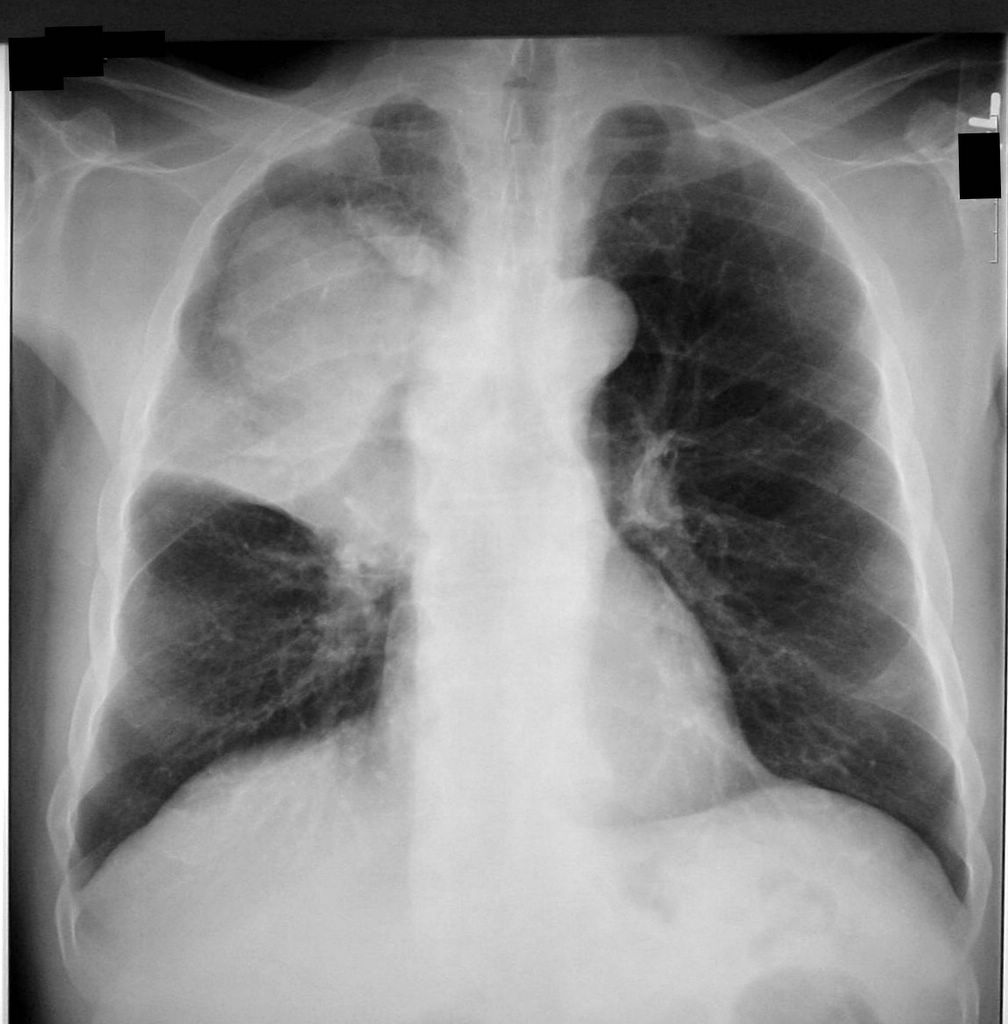
Image source: A CXR shows a right upper lobe (RUL) mass due to lung cancer. Source: Finger Clubbing due to Lung Cancer. Clinical Cases and Images.

Friday, November 18, 2011

"Family practitioners in the US are facing extinction. In their place must come nurse-practitioners" - The Lancet

From the Lancet review of the University of Pennsylvania nursing school:

Family practitioners in the US are facing extinction. In their place must come nurse-practitioners. Nurses are better educated to navigate and refer patients to specialists. They don't have any illusions about managing complex illness. Their lower threshold for referral means less risk of missing diagnoses or delaying expert care.

This is one vision for nursing to be found at the University of Pennsylvania's extraordinary School of Nursing.


I'm not sure if this is the best model for primary care in the U.S. What do you think?

References:

Offline: Nursing, but not as you know it. The Lancet, Volume 378, Issue 9805, Page 1768, 19 November 2011.
Image source: OpenClipArt.org, public domain.

Comments from Twitter:

@scanman: Looks like doctors will be an endangered genus in the US within this century

@MGastorf: so disagree. I know that is being pushed but I can provide far more complete care than nurse practitioner.

@davisliumd: Umm, No -> RT @DrVes Family practitioners in the US are facing extinction. In their place must come nurse-practitioners

@davisliumd: Agree -> RT @drves: @davisliumd that was actually a quote from The Lancet, not my opinion: j.mp/w33Kvq.

Friday, August 26, 2011

The diabetes pandemic: 1 in 4 U.S. adults now has diabetes

The number of adults with diabetes has doubled within the past 30 years.

70% of the increase is attributed to population growth and ageing. However, the number also reflects the unfortunate global shift towards a western lifestyle of unhealthy diet and physical inactivity, with obesity as the outcome.

Between 1980 and 2008, the global body-mass index (BMI) increased by 0·4—0·5 kg/m2 per decade.

In the USA, 10% of infants and toddlers already carry excess weight. More than 20% of children between the ages of 2 years and 5 years are overweight or obese.

By 2030, the number of individuals with diabetes worldwide is expected to rise to half a billion (470 million) - almost 80% of whom will be in low-income and middle-income countries. In these regions, diabetes drugs and insulin are often inaccessible or are too expensive.

References:
The diabetes pandemic. The Lancet, Volume 378, Issue 9786, Page 99, 9 July 2011.
Image source: Wikipedia, public domain.

Related from Amazon - pancreas plush toy:

Tuesday, August 16, 2011

New treatments for diabetes type 2

There is urgent need for new treatment strategies for diabetes type 2.


Some new approaches include:


- Long acting (eg, once weekly) agonists of the glucagon-like-peptide-1 receptor - they improve prandial insulin secretion, reduce excess glucagon production, and promote satiety


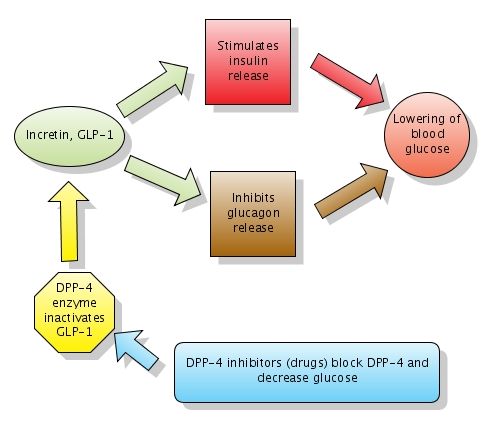
- inhibitors of dipeptidyl peptidase 4 (DPP-4), which enhance the effect of endogenous incretin hormones


- inhibitors of the sodium—glucose cotransporter 2, which increase renal glucose elimination


- inhibitors of 11β-hydroxysteroid dehydrogenase 1, which reduce the glucocorticoid effects in liver and fat


- Insulin-releasing glucokinase activators and pancreatic-G-protein-coupled fatty-acid-receptor agonists, glucagon-receptor antagonists, and metabolic inhibitors of hepatic glucose output are also being assessed


Figure 1. Action of DPP-4 inhibitors. Note that DPP-4 normally inactivates GLP-1. DPP-4 inhibitors block DPP-4 which in turn leaves GLP-1 active. Click to enlarge the figure. Created with Gliffy. The diagram Action of DPP-4 inhibitors is now on Wikipedia.


References:


Management of type 2 diabetes: new and future developments in treatment. The Lancet, Volume 378, Issue 9786, Pages 182 - 197, 9 July 2011.


Comments from Google+:


Emily Lu - Question is - how many of these treatments will actually be available to minority groups that have the higher prevalence of diabetes?


Ves Dimov - Excellent question. Check this one too: "By 2030, the number of individuals with diabetes worldwide is expected to rise to half a billion (470 million) - almost 80% of whom will be in low-income and middle-income countries. In these regions, diabetes drugs and insulin are often inaccessible or are too expensive." Early diet intervention may be the answer in type 2 diabetes.


Emily Lu - "Early diet intervention may be the answer in type 2 diabetes." -- True enough, but much much easier said than done! Patient education in general seems to me to be critical as well.


Ves Dimov - Diet is difficult to implement from patient's perspective. Activity did not bring the expected benefits in the latest trial - reported in the July 2011 issue of the Lancet.

Wednesday, August 3, 2011

Hepatitis delta virus

From a recent review in The Lancet:

Hepatitis delta virus (HDV) is a small, defective RNA virus that can infect only individuals who have hepatitis B virus (HBV). More than 15 million people are co-infected worldwide.

There are 8 genotypes of HDV. The hepatitis D virion is composed of a coat of HBV envelope proteins surrounding the nucleocapsid.

The nucleocapsid consists of:

- a single-stranded, circular RNA genome
- delta antigen, viral protein

HDV suppresses HBV replication but also causes severe liver disease with rapid progression to cirrhosis and hepatic decompensation (liver failure).

The range of clinical presentation is wide, varying from mild disease to fulminant liver failure.

Treatment of HDV is with pegylated interferon alfa; however, response rates are poor.

Better understanding of the molecular structure of HDV may lead to new therapeutic targets for this most severe form of chronic viral hepatitis.

References:

Hepatitis delta virus. Sarah A Hughes MBBCh, Heiner Wedemeyer MD, Dr Phillip M Harrison MD. The Lancet, Volume 378, Issue 9785, Pages 73 - 85, 2 July 2011.

Thursday, May 26, 2011

The 10-year rule: you must persevere with learning and practising for 10 years before making breakthrough

From The Lancet:

Hard work is required: “Genius is one per cent inspiration, ninety-nine per cent perspiration” - Thomas Edison

Late in life, Charles Darwin made the same point in a letter to his son: “I have been speculating last night what makes a man a discoverer of undiscovered things, and a most perplexing problem it is.—Many men who are very clever,—much cleverer than the discoverers—never originate anything. As far as I can conjecture, the art consists in habitually searching for causes or meaning of everything which occurs.” Darwin was a relentless student of nature from 1828 until the few weeks in late 1838 when he suddenly perceived the mechanism of evolution by natural selection.

There can be no doubt that geniuses have worked habitually and continually. Darwin produced 160 published papers, in addition to celebrated books and a vast correspondence. Albert Einstein had 240 publications, Sigmund Freud 330, Henri Poincaré 500 papers and 30 books; Edison was the owner of 1093 patents, lodging an average of one patent every 2 weeks of his adult life. In the arts, J S Bach on average composed 20 pages of finished music per day, while Pablo Picasso created more than 20,000 works.

Experience is essential: “Where observation is concerned, chance favours only the prepared mind” - Louis Pasteur

The 10-year rule states that a person must persevere with learning and practising a craft or discipline for about 10 years before he or she can make a breakthrough. The initial scientific evidence for the rule came from studies in the 1960s and 1970s of chess-players, who take 10 years and more to become masters of the game. Then it was found to apply to Olympic swimmers and concert pianists.

Hardly any genius in history—not even Leonardo da Vinci—seems to have short-cut the long and gradual path to creative breakthroughs.

References

Perspiration, inspiration, and the 10-year rule. The Lancet, Volume 376, Issue 9751, Pages 1458 - 1459, 30 October 2010.

Twitter comments:

@equijada: the ability to infer disparate ideas into one is the 1%. The rest is just salty water. 10-yrs, 10,000 hrs -> playing w/ observations

Wednesday, May 18, 2011

1 in 40 adults older than 40 years has glaucoma

One in 40 adults older than 40 years has glaucoma with loss of visual function.

Adults have one of the two forms of glaucoma:

- open-angle glaucoma
- angle-closure glaucoma

Diagnosis

At least half of glaucoma cases are undiagnosed. Glaucoma is mostly asymptomatic until late in the disease when visual problems arise. Vision loss from glaucoma cannot be recovered.

Treatment

Glaucoma is treated with daily eye-drop drugs, but adherence to treatment is often unsatisfactory.

Similarities to the pathogenesis of common CNS diseases mean that common neuroprotective strategies might exist. Successful gene therapy has been used for some eye diseases and may be possible for the treatment of glaucoma in the future.

References:
Glaucoma. The Lancet, Volume 377, Issue 9774, Pages 1367 - 1377, 16 April 2011.
Image source: Eyelashes, Wikipedia, Steve Jurvetson, Creative Commons Attribution 2.0 Generic license.