Showing posts with label Rheumatology. Show all posts

Monday, June 25, 2012

Acute low back pain: What to do? What works and what doesn't?

Here is an excerpt from a recent review article in the official AFP journal American Family Physician:

Acute low back pain is one of the most common reasons for adults to see a physician. Most patients recover quickly with minimal treatment.

"Red flags"

Serious "red flags" include:

- significant trauma related to age (i.e., injury related to a fall from a height or motor vehicle crash in a young patient, or from a minor fall or heavy lifting in a patient with osteoporosis or possible osteoporosis)
- major or progressive motor or sensory deficit
- new-onset bowel or bladder incontinence or urinary retention
- loss of anal sphincter tone
- saddle anesthesia
- history of cancer metastatic to bone
- suspected spinal infection

Diagnosis

Without signs of serious pathology, imaging and laboratory testing often are not required.

Treatment

Patient education, nonsteroidal anti-inflammatory drugs (NSAIDs), acetaminophen, and muscle relaxants are beneficial.

Bed rest should be avoided, if possible.

Exercises directed by a physical therapist, such as the McKenzie method and spine stabilization exercises, may decrease recurrent pain.

Spinal manipulation and chiropractic techniques are no more effective than established medical treatments.

No substantial benefit has been shown with:

- oral steroids
- acupuncture
- massage
- traction
- lumbar supports
- regular exercise programs

References:

Diagnosis and treatment of acute low back pain. Casazza BA. Am Fam Physician. 2012 Feb 15;85(4):343-50.

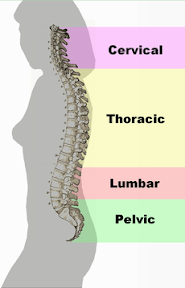
Image source: Different regions (curvatures) of the vertebral column, Wikipedia, public domain.

Tuesday, April 3, 2012

Social media and me - Rheumatologist shares his experience

This is a presentation by Dr. Ronan Kavanagh, Rheumatologist, Blogger, and Social Media in Healthcare advocate at Western Rheumatology, Galway, Ireland. His website is at ronankavanagh.wordpress.com

Socmed and me
View more presentations from Ronan Kavanagh

Comments from Twitter:

Dr. Ronan Kavanagh @RonanTKavanagh: @DrVes Thanks! You may notice I pinched a slide idea of two from you. Thanks for that too...

Tuesday, March 20, 2012

Symptomatic knee osteoarthritis (OA) increased during the past 20 years but radiographic OA did not

A recent surge in knee replacements is assumed to be due to aging and increased obesity of the U.S. population.

This cross-sectional study used data from 6 NHANES (National Health and Nutrition Examination Survey) surveys between 1971 and 2004 and from 3 examination periods in the FOA (Framingham Osteoarthritis) Study between 1983 through 2005 of the U.S. population.

Prevalence of knee pain increased by 65% in NHANES from 1974 to 1994.

In the FOA Study, prevalence of knee pain and symptomatic knee osteoarthritis doubled in women and tripled in men over 20 years.

However, no such trend was observed in the prevalence of radiographic knee osteoarthritis.

Prevalence of knee pain has increased substantially over 20 years. Obesity accounted for only part of this increase.

Symptomatic knee osteoarthritis increased but radiographic knee osteoarthritis did not. Why the patients are more symptomatic now than 20 years ago?

What is Boomeritis?

In 2006, the NYTimes described the health problems of aging baby boomers who continue to exercise: osteoarthritis which needs "knee and hip replacements, surgery for cartilage and ligament damage, and treatment for tendinitis, arthritis, bursitis and stress fractures." Some doctors call this phenomenon "boomeritis" or "Generation Ouch."

References:

Increasing Prevalence of Knee Pain and Symptomatic Knee Osteoarthritis: Survey and Cohort Data. ANN INTERN MED, December 6, 2011, vol. 155 no. 11 725-732.

What is Boomeritis?

Image source: OpenClipart.org, public domain.

Monday, February 6, 2012

Osteoarthritis at the base of the thumb has a 15-30% prevalence in adults

What is it?

Patients with osteoarthritis of the thumb carpometacarpal joint, or base of the thumb, commonly seek help for their symptoms. Arthritis at the base of the thumb causes functional disability and pain, particularly with “pinching” actions.


A hand with arthritic changes. Image source: Cicadas, a Creative Commons license.

How common is osteoarthritis of the thumb?

The prevalence of this condition increases with age and is greatest in postmenopausal women. It ranges between 15% prevalence in adults in Finland and a 33% prevalence in postmenopausal women. This is likely to increase as populations age and people stay active for longer.

How to diagnose it?

Pain reproduced on the axial grind test localizes pathology to the base of the thumb.

Trapeziometacarpal and scaphotrapeziotrapezoid joints should be assessed with plain radiographs (X-rays) that typically show degenerative changes. However, X-rays may underestimate the extent of the disease.

What to do?

Non-operative treatments can ameliorate symptoms and delay surgery in most patients with osteoarthritis of the thumb:

- behaviour modification
- pain relief
- splinting
- corticosteroid injections

No single operative procedure has been shown to be superior:

- simple trapeziectomy has the lowest complication rate
- arthrodesis may be the best option for patients who value pain relief and reliable strength and stability more than mobility (such as younger manual workers)

Piano lesson: "Rachmaninov had big hands". See how one gets 4 million views on YouTube:


References:

Osteoarthritis at the base of the thumb. BMJ, 2011.

Monday, December 26, 2011

Paget's disease - NHS Choices video


From the NHS Choices YouTube channel: An expert describes the various areas of the body that can be affected by Paget's disease - a condition in which the normal cycle of bone growth is disrupted.

The earliest references to journal clubs are in the memoirs and letters of Sir James Paget, a British surgeon, who described a group at St. Bartholomew’s Hospital in London in the mid-1800s as “a kind of club … a small room over a baker’s shop near the Hospital-gate where we could sit and read the journals.”

Sir Paget (11 January 1814 – 30 December 1899) is best remembered for Paget's disease and is considered, together with Rudolf Virchow, as one of the founders of scientific medical pathology.

References:

When was the earliest journal club?
James Paget, Wikipedia.

Thursday, December 22, 2011

How to Stay Active With Osteoarthritis: "Motion is Lotion"


Dr. Daniel Montero, a sports-medicine physician within the Department of Orthopedics at Mayo Clinic in Florida discusses what kind of exercises are you should take part in if you suffer from joint pain. Remember, "motion is lotion", says Dr. Montero.

Exercises you may need to avoid if you have moderate or severe osteoarthritis of the knee or hip include:

- Running and jogging. The difference between how much force goes through your joints jogging or running, as opposed to with walking, is sometimes more than 10-fold your whole body weight

- Jumping rope

- High-impact aerobics

- Any activity where, at any time, you have both feet off the ground at once, however briefly (basketball, jumping)

Fortunately, that leaves a lot of activities that are OK for people with knee and hip osteoarthritis and that can help keep you mobile - see the list at WebMD.

References:

Knee and Hip Exercises for Osteoarthritis. WebMD.

Wednesday, December 14, 2011

Stress fractures

From a 2011 review in the journal American Family Physician:

Stress fractures are common injuries in athletes and military recruits. These typically affect lower extremities.

Symptoms of stress fractures

Stress fractures should be considered in patients who present with tenderness and/or edema after a recent increase in activity or repeated activity with limited rest.

The Barefoot Professor says barefoot running could minimize injuries although this approach is still experimental:


The differential diagnosis of stress fractures includes:

- tendinopathy
- compartment syndrome
- nerve or artery entrapment syndrome
- medial tibial stress syndrome (shin splints) can be distinguished from tibial stress fractures by diffuse tenderness along the length of the posteromedial tibial shaft and a lack of edema

Diagnosis of stress fractures

When stress fracture is suspected, plain radiography should be obtained initially and, if negative, may be repeated after 2-3 weeks for greater accuracy.

If an urgent diagnosis is needed, triple-phase bone scintigraphy (bone scan) or magnetic resonance imaging (MRI) should be considered. Both modalities have a similar sensitivity, but MRI has greater specificity.

Treatment of stress fractures

Treatment of stress fractures consists of:

- activity modification - nonweight-bearing crutches if needed for pain relief
- analgesics
- pneumatic bracing

After the pain is resolved, patients may gradually increase their level of activity.

Surgical consultation may be appropriate for patients with:

- stress fractures in high-risk locations
- nonunion
- recurrent stress fractures


Related reading:

The Barefoot Running Revolution - INFOGRAPHIC  http://goo.gl/7SUGs

Friday, September 16, 2011

Sciatica: Robert's story


From NHS Choices YouTube channel: Robert's sciatica caused him intense pain in his right leg. He describes how the condition affected his life and mobility and what treatment options were available to him.

Friday, September 9, 2011

New Complication from Contaminated Cocaine - Bilateral Necrosis of the Ear Lobes and Cheeks

Interesting fact: Traces of cocaine taint up to 90% of paper money in the United States. Paper money become contaminated with cocaine during drug deals and directly through drug use, such as snorting cocaine through rolled bills. Amounts of cocaine found on U.S. bills ranged from 0.006-1,240 micrograms of cocaine per banknote (50 grains of sand) (http://bit.ly/27V5Yt).

Since 2005, levamisole (commonly used as to treat worm infections in humans and animals), has increasingly been used to mix cocaine for street use.

In 2009, 70% of cocaine seized at U.S. borders contained levamisole, causing an increase in cases of neutropenia among cocaine abusers.

Recently, researchers observed a new complication of levamisole contamination – vasculitis. Two cocaine abusers with similar cases of neutropenia and vasculitis presented to the University of Rochester Medical Center within 8 days of each other - with purplish plaques on their cheeks, earlobes, legs, thighs and buttocks. While the patients were not tested for levamisole levels, exposure was likely due to recent cocaine use.

Doctors should suspect levamisole exposure in patients presenting with both neutropenia and necrotic skin lesions.

See the dramatic photos from a similar case published in the NEJM here: Toxic Effects of Levamisole in a Cocaine User

References:
Bilateral Necrosis of Earlobes and Cheeks: Another Complication of Cocaine Contaminated With Levamisole. Ann of Int Med, June 1, 2010,  vol. 152  no. 11  758-759.

Friday, August 19, 2011

Exercises to Avoid with Osteoarthritis of the Knee or Hip

Exercises to Avoid with Osteoarthritis of the Knee or Hip include:


- Running and jogging. The difference between how much force goes through your joints jogging or running, as opposed to with walking, is sometimes more than 10-fold your whole body weight


- Jumping rope


- High-impact aerobics


- Any activity where, at any time, you have both feet off the ground at once, however briefly (basketball, jumping)


Fortunately, that leaves a lot of activities that are OK for people with knee and hip osteoarthritis and that can help keep you mobile - see the list at WebMD.


References:
Image source: OpenClipart.org, public domain.

Monday, August 15, 2011

Porphyrias

From a Lancet review:

Hereditary porphyrias represent a group of 8 metabolic disorders of the haem biosynthesis. They are characterised by acute neurovisceral symptoms, skin lesions, or both.

Every porphyria is caused by abnormal function of a separate enzymatic step, resulting in a specific accumulation of haem precursors:

- 7 porphyrias are the result of a partial enzyme deficiency
- a gain of function mechanism is present in one new porphyria

Acute porphyrias present with acute attacks - severe abdominal pain, nausea, constipation, confusion, and seizure - and can be life-threatening.

Cutaneous porphyrias present with painful photosensitivity, skin fragility and blisters.

Porphyrias are still underdiagnosed. Screening of families to identify presymptomatic carriers and avoidance of precipitants is important.

References:
Porphyrias. The Lancet, Volume 375, Issue 9718, Pages 924 - 937, 13 March 2010.

Tuesday, July 12, 2011

Celiprolol as treatment of choice to prevent complications in vascular Ehlers-Danlos syndrome

Vascular Ehlers-Danlos syndrome is a rare hereditary connective tissue disorder caused by mutations in the collagen type III gene ( COL3A1 ), which leads to a loss of tissue integrity in many organ systems.

Patients with vascular Ehlers-Danlos syndrome have weakened blood vessels and an increased risk of arterial dissection or rupture that can lead to early death.

The researchers assessed the ability of celiprolol, a β1-adrenoceptor antagonist with a β2-adrenoceptor agonist action, to prevent arterial dissections and ruptures in vascular Ehlers-Danlos syndrome.

Patients with clinical vascular Ehlers-Danlos syndrome were randomly assigned to 5 years of treatment with celiprolol or to no treatment.

33 patients were positive for mutation of collagen 3A1 (COL3A1). Celiprolol was uptitrated every 6 months by steps of 100 mg to a maximum of 400 mg twice daily. The primary endpoints were arterial events (rupture or dissection, fatal or not).

Mean duration of follow-up was 47 months, with the trial stopped early for treatment benefit.

The primary endpoints were reached by 20% in the celiprolol group and by 50% controls (hazard ratio [HR] 0·36).

Celiprolol might be the treatment of choice for physicians aiming to prevent major complications in patients with vascular Ehlers-Danlos syndrome.

References:
Celiprolol therapy for vascular Ehlers-Danlos syndrome. The Lancet, Volume 376, Issue 9751, Pages 1443 - 1444, 30 October 2010.

Tuesday, April 5, 2011

Gout update: New drugs for an old disease

Febuxostat is a non-purine-analogue inhibitor of xanthine oxidase that opened a new era in the treatment of gout.

Modified uricases

The use of modified uricases to rapidly reduce serum urate concentrations in patients with otherwise untreatable gout is progressing. Pegloticase, a pegylated uricase, is in development.

JAMA update, 08/2011: New Treatment Offers Hope for Patients With Severe Gout: pegloticase (Krystexxa) costs $2,500 per dose (http://goo.gl/gz9sO).

Drugs in development

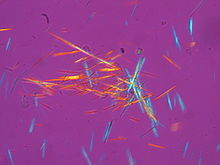
Transport of uric acid in the renal proximal tubule and the inflammatory response to monosodium urate crystals (shown above) are targets for potential new treatments.

Several pipeline drugs for gout related to the targets above include:

- selective uricosuric drug RDEA594

- various interleukin-1 inhibitors. Canakinumab (trade name Ilaris) is a human monoclonal antibody targeted at interleukin-1 beta. It was rejected by the FDA panel in June 2011.

References:

Gout therapeutics: new drugs for an old disease. The Lancet, Volume 377, Issue 9760, Pages 165 - 177, 8 January 2011.
Diuretics, beta-blockers, ACEi, non-losartan ARBs associated with increased risk of gout vs. CCB lower risk. BMJ, 2012.
FDA Panel Rejects Gout Drug Canakinumab on Safety Concerns http://goo.gl/lO9uy
The strange story that links gout with the birth of the cocktail drinks. Lancet, 2012.
Image source: Spiked rods of uric acid (MSU) crystals from a synovial fluid sample photographed under a microscope with polarized light. Wikipedia, public domain.

Monday, October 25, 2010

What's new in endocrinology from UpToDate

35% of UpToDate topics are updated every four months. The editors select a small number of the most important updates and share them via "What's new" page. I selected the brief excerpts below from What's new in endocrinology:

Osteoporosis

Denosumab (Prolia)

Denosumab is a fully human monoclonal antibody that specifically targets a ligand known as RANKL (that binds to a receptor known as RANK) which is a key mediator of osteoclast formation, function, and survival. Denosumab was approved for the treatment of postmenopausal women with osteoporosis at high risk for fracture (history of osteoporotic fracture, multiple risk factors for fracture) or patients who have failed or are intolerant of other available osteoporosis therapies. Denosumab inhibits the formation, function, and survival of osteoclasts. It decreases bone resorption, increases bone mineral density (BMD), and reduces the risk of fracture.

Teriparatide (Forteo)

Teriparatide (parathyroid hormone) did not accelerate fracture healing in postmenopausal women with distal radial fractures.

Transdermal teriparatide patch worked as well as teriparatide injection in postmenopausal women with osteoporosis.

Orlistat (Xenical, Alli) in obesity

Severe liver injury has been reported rarely with the use of orlistat (13 reports). Over the ten year period of the review, an estimated 40 million people worldwide used orlistat.

References:
What's new in endocrinology and diabetes mellitus. UpToDate.
Image source: Flickr, Creative Commons license.

Wednesday, October 13, 2010

What's new in rheumatology from UpToDate

35% of UpToDate topics are updated every four months. The editors select a small number of the most important updates and share them via "What's new" page. I selected the brief excerpts below from What's new in rheumatology:

Lower dose colchicine for treatment of acute gout

A lower dose colchicine may have similar efficacy and fewer side effects than a traditional, higher dose regimen for patients with acute gouty arthritis. Colchicine given as 1.2 mg followed by one additional dose of 0.6 mg an hour later (total dose 1.8 mg) worked similarly to 1.2 mg followed by 0.6 mg every hour for up to six hours.

Nocturnal leg cramps

Quinine is no longer recommended due to the potential for serious side effects, drug interactions, and only modest benefit. Calcium channel blockers and vitamin B complex have limited effect.

Anti-CCP antibody testing in RA

Testing for anti-citrullinated peptide/protein antibodies (ACPA) has become common in the evaluation of patients for rheumatoid arthritis (RA). Second generation anti-cyclic citrullinated peptide (anti-CCP) antibodies had the highest utility, with higher specificity and similar sensitivity to rheumatoid factor (RF). Both RF and anti-CCP testing should be performed in patients suspected of having RA. Should I order an anti-CCP antibody test to diagnose rheumatoid arthritis?  http://goo.gl/L3abc - Yes. Cost of RF is $43, anti-CCP $102

Golimumab for RA

Golimumab, a neutralizing human anti-tumor necrosis factor alpha monoclonal antibody, is administered subcutaneously once monthly for the treatment of rheumatoid arthritis, psoriatic arthritis and ankylosing spondylitis.

Rituximab for primary Sjogren's syndrome

Rituximab, which is used for the treatment of B cell lymphomas, rheumatoid arthritis, and other autoimmune and lymphoproliferative disorders, is a chimeric monoclonal antibody directed against the B cell antigen CD20. One course of rituximab treatment resulted in significant improvement in patients with Sjogren's syndrome (SS).

References:
What's new in rheumatology. UpToDate.

Wednesday, June 30, 2010

Cognitive behavioural treatment may work for low-back pain

Low-back pain is a common and costly problem. This study estimated the effectiveness of a group cognitive behavioural intervention in addition to best practice advice in people with low-back pain in primary care.

Over 1 year, the cognitive behavioural intervention had a sustained effect on troublesome subacute and chronic low-back pain at a low cost to the health-care provider.

References:


Image source: Different regions (curvatures) of the vertebral column, Wikipedia, public domain.

Thursday, May 20, 2010

Osteoporosis Drug Lasofoxifene May "Fight" Several Diseases But Increases Risk of Blood Clots

Lasofoxifene is a part of a class of drugs known as nonsteroidal selective estrogen-receptor modulators (SERMs). It has already been shown to decrease the bone loss associated with osteoporosis, like other SERMs, including tamoxifen and raloxifene. But until now its effect on other health conditions commonly experienced by postmenopausal women was unknown.

The women who took lasofoxifene had an 81% lower risk of estrogen-receptor (ER) positive breast cancer, a 32% lower risk of heart-related events like heart attack, and a 36% lower risk of stroke. "This is the first SERM that reduces the risk of all of these conditions at once."

However, not all the results were positive. As with other SERMs, women taking lasofoxifene had double to nearly three times the risk of experiencing a serious blot clot of the deep veins.

References:
Osteoporosis Drug May Fight Several Diseases. WebMD, 2010.
Image source: Flickr, Creative Commons license.

Thursday, May 13, 2010

Back and forth: Study fails to show link previously found between virus and chronic fatigue syndrome

A UK study analysing samples from patients with chronic fatigue syndrome has found no evidence of a link with a retrovirus (XMRV). The virus was first described in 2006.

Patients with chronic fatigue syndrome, also known as myalgic encephalomyelitis, often report that their condition—a mix of symptoms including extreme fatigue—began after an otherwise normal viral infection.

The xenotropic murine leukaemia virus-related virus (XMRV) was found in 67% of patients with chronic fatigue syndrome in a study reported last year (Science 2009,326:585-9).


The Gift of Time is a short film about the doctors who discovered the XMRV virus and the breakthru potential for prostate cancer.

References:

Sunday, April 4, 2010

Serotonin Blocker May Build New Bone in Osteoporotic Mice by Decreasing GI Serotonin Levels

From WebMD:

When investigators treated mice with an experimental drug that stopped the gut from synthesizing serotonin, they were able to reverse severe bone loss and essentially cure osteoporosis in the animals.


Serotonin May Hold Key to Halting Osteoporosis. NatureVideoChannel — February 05, 2010 — A drug that reverses osteoporosis in mice looks like a promising candidate for treating the human version of the disease. Gerard Karsenty and his colleagues at Columbia University Medical Center have shown that blocking the neurotransmitter serotonin--secreted from the gut--promotes bone growth. The research appears on-line at www.nature.com/naturemedicine - Yadav et al. Nature Medicine, 7 February 2010. DOI: 10.1038/nm.2098.

Most bone treatments work to block bone loss and make existing bone stronger. One drug, Forteo (teriparatide), does build new bone, but it requires daily injections and is limited to two years of use.

References:
Serotonin May Be a Key to Treat Osteoporosis. WebMD.

Wednesday, February 3, 2010

Treatment Options for Osteoporosis

I selected a few excerpts from a patient information review in the New York Times:

What is osteoporosis

Osteoporosis is defined as having a bone mineral density T score of minus 2.5 or lower. Lesser degrees of bone loss, known as osteopenia, may not benefit from drug therapy.

Bisphosphonates

The first drug licensed to counter osteoporosis, Fosamax, is now available generically as alendronate, which can be taken once a day or, at a higher dose, once a week. A reluctance on the part of many patients to adhere to a daily or weekly regimen led to the development of Boniva (ibandronate), administered by an intravenous injection every three months. To further simplify the frequency of administration, Reclast (zoledronic acid) was developed as a once-a-year intravenous treatment.

Actonel, alendronate and Boniva have been shown in three-year studies of postmenopausal women to reduce vertebral fractures by 41-50%, and less for other kinds of fractures.

A three-year study of Reclast found it to be somewhat more effective, with a 70 percent reduction in vertebral fractures, 41 percent in hip fractures and 25 percent in other fractures in postmenopausal women with osteoporosis.

Side Effects of Bisphosphonates

In a large study of Reclast, there was also a worrisome increase in atrial fibrillation — an irregular heart rhythm — not known to occur with other bisphosphonates.

Low-trauma fracture with a delay in healing or complete failure may occur after many years on bisphosphonates.

These side effects have prompted a warning that after five years on bisphosphonates, people should take a break from the drugs for at least a year.

Evista (raloxifene)

Evista (raloxifene) has an added advantage of reducing the risk of breast cancer, but the disadvantage of increasing the risk of deep vein blood clots.

Calcitonin

Somewhat less effective at reducing vertebral fractures is calcitonin, a naturally occurring hormone sold as Fortical and Miacalcin.

Forteo (teriparatide)

Finally, there is the bone-building drug Forteo (teriparatide), which must be self-injected once a day. This human parathyroid hormone can reduce vertebral fractures by 65 percent and other fractures by 53 percent within 18 months in patients with osteoporosis.

Denosumab

Under study is an entirely new bone drug, denosumab, a human monoclonal antibody. The drug inhibits a receptor that activates cells called osteoclasts that break down bone. In a large three-year study, denosumab, given by injection every six months to postmenopausal women with osteoporosis, reduced vertebral fractures by 68 percent and hip fractures by 40 percent.

References:
Options for Bone Loss, but No Magic Pill. NYT, January 4, 2010.
Denosumab is a monoclonal antibody that reduces fractures in osteoporosis
Image source: Flickr, Creative Commons license.