Tuesday, May 4, 2010

"Physicians - grumpy and getting grumpier"

By the numbers:

According to Sermo.com and their Physician Sentiment Index℠ (PSI):

- 64% of physicians cited the current healthcare climate as somewhat or very detrimental to their delivery of quality care

- Only 22% are optimistic about the ability of the American physician to practice independently or in small groups

- 59% are of the mind that the quality of medicine in America will decline in next five years; only 18% believe the quality of medicine will improve

- 53 percent believe pay-for-performance will have a negative/very negative impact on the effort required to get paid

Comments from Google Buzz:

Nicholas Genes - Sigh. This poll was comprised of 1000 docs on Sermo, which might very well be a self-selecting group of grumpy physicians. Also, this poll was sponsored by Aetna, an insurance organization with perhaps a vested interest in sabotaging health insurance reform and publicizing physicians' negative perceptions of health care. I wouldn't put too much weight on these results.

Ves Dimov, M.D. - Exactly. The title catches some of the sentiment of many doctors though.

Image source: sxc.hu

Can You Tell Your Life Story In 6 Words?


Larry Smith and Rachel Fershleiser talk to NPR about the fun and the challenge of capturing real-life stories in six little words.

Some examples related to medicine:

Alzheimer's: meeting new people every day.
Phil Skversky

After cancer, I became a semicolon.
Anthony R. Cardno

Normal person becomes psychotic on Twitter.
Robin Slick

Yale at 16, downhill from there.
Anita Kawatra

References:

Can You Tell Your Life Story In Exactly Six Words? NPR, 2010.
FDA Approves "Alzheimer's CT scan" by Eli Lilly - radioactive agent florbetapir tags clumps of sticky amyloid in brain. WSJ, 2012.

Monday, May 3, 2010

U.S. Hospital Social Media List Includes More Than 600 Hospitals

280 YouTube Channels
382 Facebook pages
470 Twitter Accounts
82 Blogs

Twitter is the easiest and blogs are the most difficult and time-consuming social media channel, respectively. This explains the difference in numbers to some extent - 470 Twitter Accounts vs. only 82 Blogs.

Australian hospitals lag behind U.S. in social media use: only 13% of them are on Twitter, 11% Facebook, 10% YouTube http://goo.gl/eKZWW

References:
Image source: OpenClipArt.org, public domain.

Approach to evaluation and management of syncope in adults - BMJ Review

Syncope is common in all age groups, and it affects 40% of people during their lifetime, usually described as a "faint" or "blackout".

Neurally mediated syncope, which is benign, is the most common cause

Cardiac syncope as a result of arrhythmias or structural cardiopulmonary disease is more common with increasing age. Cardiac syncope is associated with increased mortality and must be excluded.

Brain imaging, carotid Doppler ultrasound, electroencephalography, and chest radiography are often not needed in patients with syncope.

References:
An approach to the evaluation and management of syncope in adults. BMJ 2010;340:c880.
http://www.bmj.com/cgi/content/short/340/feb19_1/c880
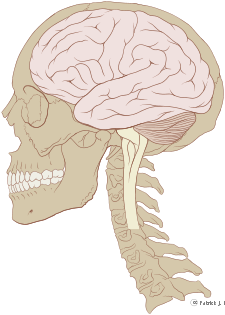
Image source: Illustration of the human brain and skull. Wikipedia, Patrick J. Lynch, medical illustrator, Creative Commons Attribution 2.5 License 2006.

Sunday, May 2, 2010

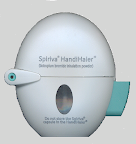
Tiotropium for COPD: A good foundation therapy for most patients

From a BMJ Editorial:

Tiotropium is a once daily, inhaled, long acting anticholinergic drug (LAMA) that provides 24 hour improvement in airflow and hyperinflation in patients with chronic obstructive pulmonary disease (COPD).

Clinical trials have consistently shown that these physiological effects translate into improvements in:

- lung function
- exercise tolerance
- health related quality of life
- fewer exacerbations

References:
Tiotropium and chronic obstructive pulmonary disease. BMJ, 2010.
http://www.bmj.com/cgi/content/short/340/feb19_1/c833
Image source: Wikipedia, public domain.

Saturday, May 1, 2010

Some nurses paid more than family doctors - CNN

Primary care doctors were offered an average base salary of $173,000 in 2009 compared to an average base salary of $189,000 offered to certified nurse anesthetists, or CRNAs.

It's the fourth year in a row that CRNAs were recruited at a higher pay than a family doctor.

Comments from Google Buzz:

Jeffrey Benabio, MD - And soon doctor of nursing programs will graduate nurses who call themselves "doctor" in clinic. Physicians have been asleep at the wheel.

http://en.wikipedia.org/wiki/Doctorate_in_Nursing

Francesco Diana - without words

Anne Marie Cunningham - Both of these are very high salaries. As @scanman points out, they are unobtainable for most people working in health in India and countries. Can we tolerate such global inequality?

How should salaries in any part of the world be determined? Are both these groups paid too much?

At the moment there is a great deal of uncertainty on how the role of a doctor differs to the role of a nurse. Professor Alan Maynard suggests that professions are bad for healthcare. http://www.healthpolicyinsight.com/?q=node/458 What do you think?

Image source: OpenClipArt.org, public domain.

Turning medical residents away from copy-and-paste culture facilitated by EMR


Cleveland VA is trying to cut out the burgeoning subculture of “copy-and-paste”: A phenomenon made possible by electronic medical records in which physicians copy old information about a patient and paste it into a new section of the chart.

The practice is seen by medical residents as a time-saver but the attendings consider it an “egregious problem” because the practice has the potential to perpetuate mistakes. For example, someone might copy and paste information from a patient’s medical history without verifying that the information is correct. Any errors that might exist will be repeated.

EMR can’t just disable the copy-and-paste function, since such a move would impact other programs.

References:

Medical Malpractice Liability in the Age of Electronic Health Records - NEJM, 2010 http://goo.gl/cGZG9
"The iPatient is getting wonderful care across America. The real patient wonders, "Where is everybody?" NYTimes, 2011.