Monday, May 7, 2012

The Diet Factor in Attention-Deficit/Hyperactivity Disorder - State-of-the-Art Review Article in Pediatrics

Diets that were tried in attempt to reduce symptoms associated with attention-deficit/hyperactivity disorder (ADHD) include:

- sugar-restricted
- additive/preservative-free
- oligoantigenic/elimination
- fatty acid supplements

Omega−3 supplement is the latest dietary treatment with positive reports of efficacy. Interest in the additive-free diet of the 1970s is occasionally revived.

Provocative reports have drawn attention to the ADHD-associated “Western-style” diet, high in fat and refined sugars, and the ADHD-free “healthy” diet, containing fiber, folate, and omega-3 fatty acids.

Indications for dietary therapy include:

- medication failure
- parental or patient preference
- iron deficiency
- change from an ADHD-linked Western diet to an ADHD-free healthy diet, when appropriate

In practice, additive-free and oligoantigenic/elimination diets are time-consuming and disruptive to the household; they are indicated only in selected patients.

Iron and zinc are supplemented in patients with known deficiencies; they may also enhance the effectiveness of stimulant therapy.

In patients failing to respond or with parents opposed to medication, omega-3 supplements may warrant a trial.

References:

The Diet Factor in Attention-Deficit/Hyperactivity Disorder. J. Gordon Millichap, MD and Michelle M. Yee, CPNP. PEDIATRICS Vol. 129 No. 2 February 1, 2012, pp. 330 -337, (doi: 10.1542/peds.2011-2199)

Image source: Olive oil, Wikipedia

Saturday, May 5, 2012

Healthcare social media - top articles

Here are my suggestions for some of the top articles related to healthcare social media in the past 2 weeks:

Doctors and social media: “How to Stop Worrying and Learn to Love the Internet” http://goo.gl/pIrgh

Consumer Expectations for Healthcare Social Media http://goo.gl/REXqV

Why all hospitals need Twitter accounts: Google ranking of a URL linked to number of Tweets about that URL http://goo.gl/AYf9t

Interviewee eliminated as a candidate because his Klout score was too low (34), “They hired a guy whose score was 67”. Even if you have no idea what your Klout score is, there’s a chance that it’s already affecting your life. People with formidable Klout will board planes earlier, get free access to VIP airport lounges, stay in better hotel rooms, and receive deep discounts from retail stores. A two-week vacation from social media might causes your Klout score to nose-dive. http://goo.gl/ABu2S

13 Things You Never Knew You Could Do On LinkedIn http://goo.gl/mh4da

100 Ways To Use Twitter In Education, By Degree Of Difficulty http://goo.gl/lAs5v

Pack the Right Gadgets for the Road - NYTimes http://goo.gl/SmQgA

A Review of Living Language and Rocket Languages - App Smart - NYTimes http://goo.gl/kpvJT

10 HTML Tags All New Bloggers Should Learn http://goo.gl/24FpW

Is this the future of Khan Academy? http://goo.gl/xtErX - Bozeman Biology on YouTube http://goo.gl/GUry5

Many consumers worldwide worry that technology is overtaking their lives http://goo.gl/cJj5e

The articles were selected from my Twitter and Google Reader streams.

Comments from Twitter:

Heidi Allen @dreamingspires: Healthcare social media - worth reading - Klout and Google rankings linked to tweets.

Friday, May 4, 2012

Top articles in medicine in April-May 2012

Here are my suggestions for some of the top articles in medicine in April-May 2012:

Always advocate for the patient. When in a bind, ask yourself, “Self, what's best for my patient?” You can only see ONE patient at a time. The patient in front of you is the only patient you have. http://bit.ly/HGJcU8

Adolescence is changing: age of onset of puberty is decreasing, age at which mature social roles are achieved is rising http://goo.gl/dshDG

Pilot sends plane into dive after mistaking Venus for oncoming plane http://bit.ly/INqXjw - "It's happened to most of us", starts CNN... North American-based pilots flying eastbound at night towards Europe are at increased risk of fatigue-related performance issues http://bit.ly/INqXjw

Are we ready to recommend aspirin for cancer prevention? Lancet http://goo.gl/WyRXY and http://goo.gl/oytIK

First described in 1967, Kawasaki disease is now a leading cause of acquired heart disease in developed countries http://goo.gl/ShL00 -- Addition of prednisolone to standard treatment with IVIG improves coronary artery outcomes in severe Kawasaki disease http://j.mp/JdUbTl

Bullying victimisation is associated with a myriad of emotional and behavioural problems throughout adolescence http://goo.gl/VzBrf

Thoughts for new medical students http://goo.gl/cr5k3 - Advice from the BMJ editor in 2003, still mostly relevant.

Consumer Expectations for Healthcare Social Media http://goo.gl/REXqV

Women are much more responsive than men to the weather, and life satisfaction decreases with rain (study) http://goo.gl/gp5KE

Use of Social Media by Western European Hospitals: Longitudinal Study shows that SoMe awareness is growing http://goo.gl/l41tz

Geriatrics update 2012: What parts of our practice to change, what to ‘think about’ - CCJM http://goo.gl/rvH9O

Family history: Still relevant in the genomics era - CCJM http://goo.gl/ty5vG

The articles were selected from my Twitter and Google Reader streams.

Thursday, May 3, 2012

How to have a successful blog - with slow, steady growth

Tips from ProBlogger on how to have a successful blog:

- Regular useful content: Daily “how to” posts that solved problems and showed people how to achieve their goals, 90%

- Shareable content: inspirational posts, breaking news, humor, controversy, grand list posts, 5%

- Community: reader discussions, debates, polls, forum, 5%

- Email newsletter: collect people’s email addresses and send them weekly updates/newsletters

Here is a great quote from another blog: "Blogging is teaching, whether it’s yourself or others, and that’s the best feeling in the world" http://goo.gl/hCpF8

References:

2 Different Tales of Blog Growth. ProBlogger.

Wednesday, May 2, 2012

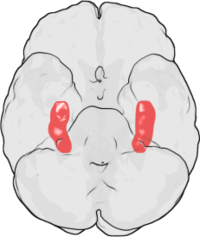
Memory loss - clinical focus on practical neurology

These are excerpts from a review in the Medical Journal of Australia (MJA):

Older people with mild cognitive impairment are at increased risk of progressing to dementia, but no tests are helpful in assessing this risk. Medications are not beneficial in mild cognitive impairment.

Physical activity and treatment of hypertension decrease the risk of dementia.

In people with Alzheimer’s disease, a cholinesterase inhibitor or memantine (an N-methyl- D-aspartate receptor antagonist) provides symptomatic relief. Medications do not change progression of the illness.

Behavioural and psychological symptoms are common in Alzheimer’s disease.

Atypical antipsychotics reduce agitation and psychosis but increase the risk of cardiovascular events.

Antidepressant role in managing depression with mild cognitive impairment is uncertain but they may increase the risk of delirium and falls.

References:

Memory loss. Leon A Flicker, Andrew H Ford, Christopher D Beer and Osvaldo P Almeida. Med J Aust 2012; 196 (2): 114-117.

Image source: Hippocampus, from Wikipedia, public domain.

Tuesday, May 1, 2012

Best of Medical Blogs - weekly review, blog carnival

What happened to "Grand Rounds" medblog carnival?

It's sad to see the demise of "Grand Rounds" medblog carnival. The weekly summary of the best medical blog posts has been published since 2004, with only few breaks. There have not been any editions for more than a month, and no new ones are scheduled. A new initiative by Health Care SoMedia Review could replace some of it http://goo.gl/73RpE

This blog post is a part of a project to recreate a weekly review, or blog carnival, of the best medical blog posts. Feel free to send your suggestions to my email at clinicalcases@gmail.com. The “Best of Medical Blogs - weekly review, blog carnival” will be published on Tuesdays, just like the old Grand Rounds. The last organizers of the Grand Rounds blog carnival. @DrVal and @NickGenes, are aware of this project.

How Doctors Manage Their Social Media Profiles

Personal vs. Professional: How Doctors Manage Their Social Media Profiles is a blog post by Matt Wood of the University of Chicago Medicine blog http://goo.gl/JNyu1. Matt has published a series of great blog posts recently about physicians’ use social media. The doctors at University of Chicago are clearly the leaders in social media use in a city with a rich history of great medical centers such as UChicago Medicine, Northwestern, Childrens’ Memorial, Rush, Loyola and Northshore. Matt tries to find out what makes the UChicago doctors more comfortable using social media that their peers at other institutions: http://goo.gl/JNyu1

Consumers use social media to make medical decisions

Consumer Expectations for Healthcare Social Media - this is a succinct summary by Ed Bennett, “a maker of lists” of healtchare oragnizations that use social media http://goo.gl/REXqV

Digital Strategies for Healthcare Organisations - a good overview by the Australian blog IV line http://goo.gl/PZtWl

Doctors’ salaries

Dr. Mandrola quotes an experienced colleague on doctors' salaries: “We are all happy with what we make. What upsets us most is seeing what others make.” Since then, I try not to dwell on what others make. http://goo.gl/WBnJq

Healthcare social media is a “moral obligation” for doctors

Healthcare social media is a 'moral obligation', says Farris Timimi, M.D., medical director for the Mayo Clinic Center for Social Media, quoted by “Fierce Health IT” . Social media needs to be grown and nurtured for patients. "Our patients are there. Our moral obligation is to meet them where they're at and give them the information they need so they can seek recovery," Dr. Timimi said. "You've got to be ready for it. You build it for the patients; not for yourself. "This is not marketing," he added. "This is the right thing to do." http://goo.gl/BHzKf

Social media is no more a moral obligation for doctors than it is to appear on TV and radio shows, and to write newspaper columns. It is great if you have the time and aptitude to do it, but the most important things is to focus on what matters most - providing correct diagnosis and best possible treatment to your patients.

Comments from Twitter:

Westby Fisher, MD @doctorwes: Best of Medical Blogs - weekly review, RIP blog carnival bit.ly/KsBSLJ

Laika (Jacqueline) @laikas: After the demise of THE Grand Rounds @DrVes starts his own weekly blog review bit.ly/Iqgcmx Gr8 initiative; but still miss the OLD GR

WB Medical Education @WBmeded: Hope to check out some of these later, looks interesting RT @DrVes: Best of Medical Blogs: weekly review, blog carnival goo.gl/fb/d870P

Mike Cadogan @sandnsurf: Another great way to control the information overload with the Best of Medical Blogs - weekly review bit.ly/K1stxo

Monday, April 30, 2012

What is the minimal webmaster competence for running a medical blog?

"What is the minimal webmaster competence for running a medical blog?", asked a relatively new blogger recently. My suggestions are listed below.

Keep it simple, and free

If your blog content is great and compelling, you don't need much HTML, CSS, etc. knowledge. Knowing HTML doesn't hurt, of course, but it's not essential.

Keep it simple, and free. Many doctors are wrongly advised to spend time and money on custom installations of WordPress, hosting, and social media consultatants when all they need is a free Google/Blogger blog with a custom domain name.

"Blogging is teaching, whether it’s yourself or others, and that’s the best feeling in the world" 

Speaking from personal experience, my blogs reached more than 8 million page views and I've never used outside help for blog launch or maintenance. I don't think my blog content is that great or original apart from a few mind map diagrams, mnemonics and social media how-to articles - it's just my personal digital netbook that I share with the world.

I typically publish one post per day during the week at CasesBlog and AllergyNotes. They are scheduled 2-3 months in advance, and publish automatically, unless I edit them the day before they are due for posting.

"Blogging is teaching, whether it’s yourself or others, and that’s the best feeling in the world" http://goo.gl/hCpF8

Comments from Google Plus and Twitter:

Ahmad Gandour, Jan 25, 2012: This is a great advice i will consider starting a blog in the near future .you really post interesting post i check your post every day in the morning while i am checking journal watch and BEJM news letter thanks for these great post .

Ves Dimov, M.D., Jan 25, 2012: Thank you for your interest. I typically publish one post per day during the week at CasesBlog and AllergyNotes. They are scheduled 2-3 months in advance, and publish automatically, unless I edit them the day before they are due for posting.

Ahmad Gandour, Jan 25, 2012: Thanks for the info i booked marked the both pages i am going to check it every day

Ves Dimov, M.D., Jan 25, 2012: You can subscribe to the RSS feeds - this way there is no need to visit the website every day - the new post gets delivered to your RSS reader (Google Reader) or email.

Ahmad Gandour, Jan 25, 2012: Done :)

Jill Celeste, Jan 25, 2012: Blogger is the perfect tool for a doctor. Great post!

Heidi Allen @dreamingspires: What is the minimal webmaster competence for running a medical blog? casesblog.blogspot.com/2012/04/what-i… Keep it simple and free. Teach yourself and others