Showing posts with label Immunology. Show all posts

Tuesday, July 26, 2011

Medicine's first Nobel laureate

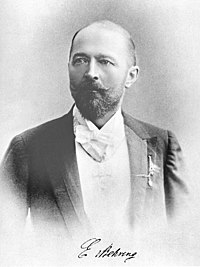
Medicine's first Nobel laureate was Emil von Behring (1854-1917). He was the discoverer of diphtheria antitoxin in 1890 and attained a great reputation in his lifetime but also was a subject of controversy:

Behring’s unabashed pursuit of financial rewards for his efforts — unusual in that era—drew much criticism. One of the first modern medical entrepreneurs, he aggressively sought to patent his discoveries, and profited handsomely from their applications. This conflicted with the more genteel notions that prevailed at the time, which venerated physicians as selfless servants of mankind.

For all his accomplishments, Behring was a deeply troubled man. He suffered from frequent bouts of profound depression, and was institutionalised several times.

The great discoverer of serum therapy died of pneumonia in Marburg on March 31, 1917.

References:
Emil von Behring (1854-1917): Medicine's first Nobel laureate. Singapore Med J. 2011 Jan;52(1):1-2 (free full text PDF).
Image source: Emil Adolf von Behring, Wikipedia, public domain.

Sunday, January 16, 2011

Diagnosing tuberculosis with cytokines IL-15, IL-10 and MCP-1, in addition to interferon-gamma

A pattern of two cytokines, called MCP-1 and IL-15, was reasonably good at differentiating between persons sick with TB and persons infected but not sick.

Monocyte chemotactic protein-1 (MCP-1) is a small cytokine belonging to the CC chemokine family. According to the new nomenclature, MCP-1 is called chemokine (C-C motif) ligand 2 (CCL2).

A third cytokine called IP-10 also showed promise at differentiating between people who are infected and those who are not.

Interferon gamma-induced protein 10 kDa (IP-10) is also known as C-X-C motif chemokine 10 (CXCL10). It belongs to the CXC chemokine family.

These 3 cytokines could form the basis of a new test to quickly detect whether tuberculosis is dormant or active and infectious.


52 chemokines from 4 families have been described. They interact with 20 receptors (click here for a larger image).

What is the difference between cytokine, interleukin and chemokine?

Cytokines (Greek cyto-, cell; and -kinos, movement) are substances secreted by cells of the immune system which carry signals locally between cells. They are proteins, peptides, or glycoproteins.

Interleukins are a group of cytokines first found to be expressed by white blood cells (leukocytes). The name is a misnomer since interleukins are produced by a wide variety of cells, not only leukocytes.

Chemokines (Greek -kinos, movement) are a family of small cytokines, or proteins secreted by cells. The name is derived from their ability to induce directed chemotaxis in nearby responsive cells; they are chemotactic cytokines.

Xpert MTB/RIF is a rapid diagnostic test for tuberculosis with high sensitivity (90%) and specificity (99%). Lancet, 2011.

Thursday, October 28, 2010

Stelara (ustekinumab) and Remicade (infliximab) are effective if Enbrel (etanercept) stops working in psoriasis

About 7.5 million Americans suffer from psoriasis, a lifelong disorder characterized by inflammation of skin and, often, the joints.


Stelara, Remicade, and Enbrel are all biologics -- drugs made of genetically engineered proteins -- that are generally used to treat patients who aren't responding to traditional therapies such as light therapy and methotrexate.


Remicade and Enbrel both block tumor necrosis factor-alpha (TNF-alpha), a chemical produced by immune cells that fuels inflammation, much like gas on a fire. Stelara targets two proteins, interleukin 12 and interleukin 23, that also drive the inflammatory process.


References:

Study Shows Stelara and Remicade Are Both Effective if Enbrel Stops Working. WebMD, 2010.
Ustekinumab is a Strong Option for Moderate to Severe Psoriasis - anti-IL12/23 monoclonal antibody with NNT of 2 http://goo.gl/gbXSJ

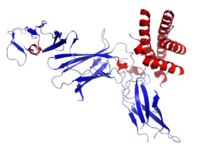
Image source: Crystal structure of human IL-12, Wikipedia, public domain.

Friday, April 16, 2010

Taking charge of your toddler's vaccination record is the best way to ensure they don't miss any shots

From Reuters:

"In our country, we think the doctor should have all the medical records," said Dr. James McElligott, a pediatrician at the Medical University of South Carolina who worked on the study. "I like the idea of putting the ownership back in Mom's hands and empowering her a little bit."

When parents kept a so-called shot card, their child's odds of being up-to-date on vaccinations rose by more than half.

40 percent of the toddlers had a shot card, and 84 percent of these had up-to-date vaccinations. By contrast, only 79 percent of the children without a card had all their shots.

Use the card: it doesn't have a downside and it's cheap."

References:
Want kids' vaccinations up to date? Keep the record | Reuters, 2010.
http://www.reuters.com/article/idUSTRE61E37I20100215

Sunday, March 28, 2010

FDA: Rotarix rotavirus vaccine contains DNA from a "harmless" pig virus and should not be used

GlaxoSmithKline confirmed that the pig virus, porcine circovirus type 1 or PCV-1, has been in the vaccine since it was developed.

75% of U.S. doctors prescribe the three-dose RotaTeq vaccine, made by Merck, which was approved in 2006.


Electron micrograph of Rotaviruses. Image source: Wikipedia, Environmental Protection Agency, public domain.

Rotavirus-related diarrhea used to cause 70,000 hospitalizations per year in the U.S. before the introduction of the vaccines. The first vaccine against the virus called RotaShield was withdrawn from the market due to reports of an intestinal blockage (intussusception) associated with its use.

References:
Pig Virus DNA Found in Rotavirus Vaccine. WebMD.
Image source: GSKsource.com.

Now There’s Pig Virus DNA in Merck’s Rotavirus Vaccine, Too. WSJ, 2010.

Updated: 05/06/2010

Tuesday, January 12, 2010

Allergy and Immunology

Editor: V. Dimov, M.D., Assistant Professor at the University of Chicago

Allergy and Immunology Cases at AllergyCases.org

News About Allergy and Immunology at AllergyNotes

Patient Information

Follow us and connect:


Published: 01/12/2010
Updated: 06/28/2010